Digital Promenade Your online reputation is not what you say about your business – it...
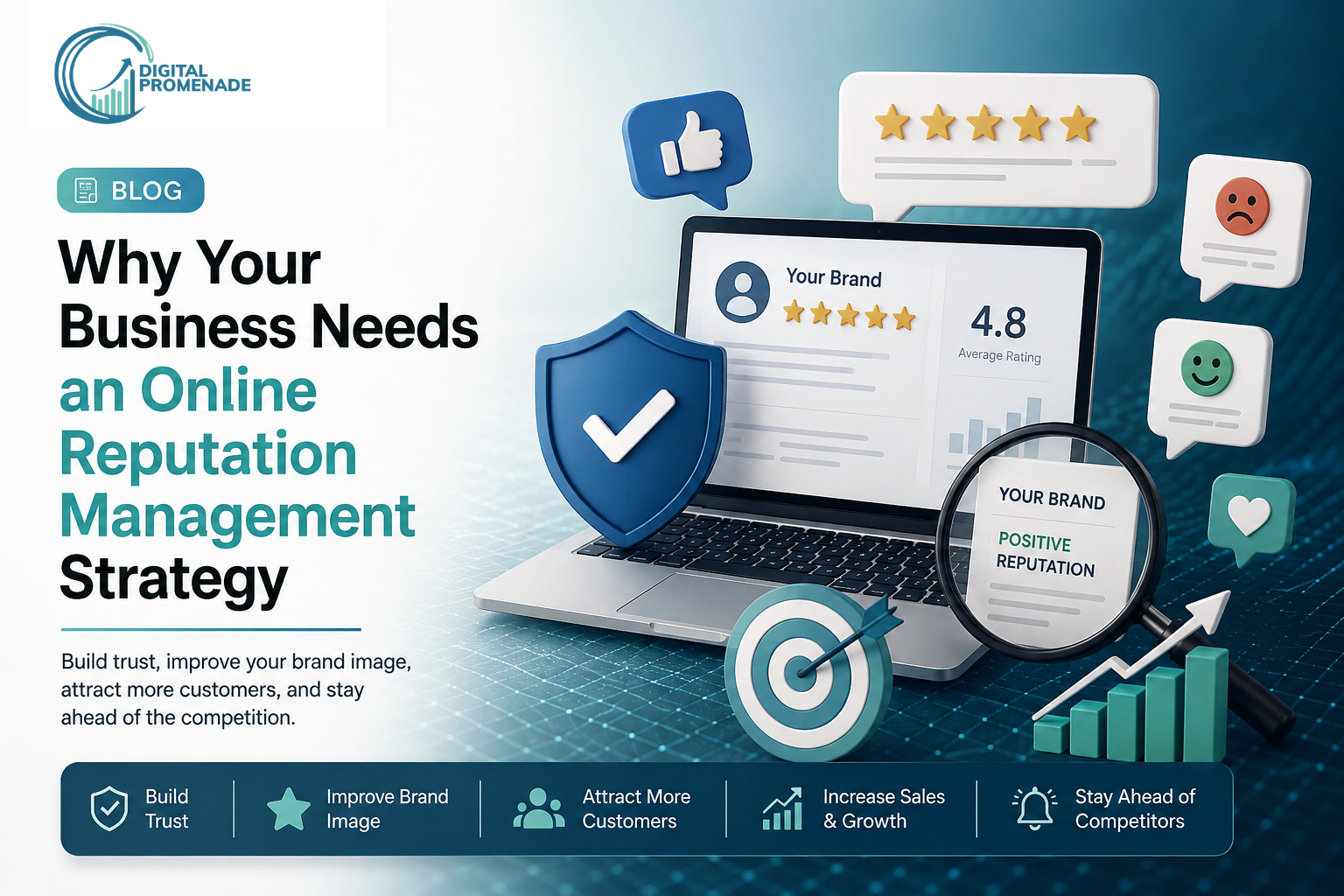
Why Your Business Needs an Online Reputation Management Strategy
Digital Promenade
Your online reputation is not what you say about your business – it is what Google, review sites, and now AI platforms like ChatGPT and Gemini say about it when someone else asks. A single unanswered negative review can influence more buying decisions than your entire homepage, and a business without a reputation strategy is leaving that narrative to chance. Online reputation management (ORM) fixes this by turning reputation from something that happens to you into something you actively control.
Most businesses only think about reputation management after something goes wrong – a viral complaint, a wave of one-star reviews, a damaging news mention. By then, ORM becomes damage control instead of strategy, and damage control always costs more, takes longer, and works less reliably than prevention.
This guide explains what ORM actually involves, why waiting until a crisis hits is the most expensive way to approach it, and how to build a strategy that protects and grows your brand’s reputation before problems start.
What Is Online Reputation Management, Really?
Online reputation management is the ongoing practice of monitoring, influencing, and improving how a business appears across search results, review platforms, social media, and increasingly, AI-generated answers. It combines SEO, review management, content publishing, and crisis response into one continuous system rather than a single one-time task.
ORM vs. PR vs. Crisis Management - What's the Difference?
Public relations focuses on media coverage and third-party storytelling; ORM focuses specifically on what appears when someone searches your brand name. Crisis management is a subset of ORM that activates only when something has already gone wrong. A mature ORM strategy runs continuously and reduces how often you need crisis management in the first place, because a business with consistently strong reviews and search presence has more buffer against any single negative event.
What Counts as Your "Online Reputation" Today
Your reputation today spans Google Business Profile reviews, search results for your brand name, social media comments and mentions, industry-specific review sites, news coverage, and AI-generated summaries when someone asks ChatGPT or Gemini about your business. Most businesses only monitor one or two of these surfaces, which leaves real reputation risk sitting in blind spots they never check.
Online reputation management is broader than “responding to reviews” – it is the coordinated management of every surface where your business gets evaluated, from search engines and review sites to the AI platforms now summarizing brand reputations directly in conversation.
Why Does Your Business Need an Online Reputation Management Strategy?
Your business needs an ORM strategy because buyers now research a company’s reputation before they ever make contact, and by the time you notice a reputation problem through lost sales, it has usually been visible online for weeks. A proactive strategy catches and addresses these signals before they cost you customers.
Buyers Research You Before They Ever Contact You
By the time a prospect fills out your contact form or calls your business, they have almost always already checked your reviews, your Google search results, and often your social media. If what they find is outdated, inconsistent, or dominated by unanswered complaints, you lose the sale before the conversation even starts – with no way to know it happened.
One Bad Review Thread Can Outrank Your Homepage
Search engines frequently rank review platforms and complaint threads above a business’s own website for branded searches, especially if the business has never invested in owning its search results. Once a negative thread ranks on page one, it stays there until you actively publish and promote stronger content to outrank it. According to <cite index=”34-1“>a study by Emplifi, nearly 90% of consumers say that customer ratings and reviews have the biggest impact on purchasing decisions</cite>, which makes this far more than a cosmetic search-results issue.
AI Platforms Now Summarize Your Reputation, Not Just Google
When someone asks ChatGPT or Gemini “is [business] any good,” the AI pulls from the same reviews, articles, and mentions that make up your traditional online reputation, then delivers a condensed summary instead of a list of links to click through. This means a poorly managed reputation now gets amplified into a single confident-sounding answer, with no easy way for a prospect to see the full picture or context behind it.
Reputation Signal | Where Buyers See It | Risk If Unmanaged |
Google Business Profile reviews | Google Search, Google Maps | Low star rating suppresses local visibility |
Branded search results | Google, Bing | Negative threads or old news can outrank your site |
Social media mentions | Instagram, Facebook, X, LinkedIn | Unanswered complaints look like indifference |
Industry review sites | Trustpilot, G2, Clutch, Justdial | Missed responses reduce buyer confidence |
AI-generated summaries | ChatGPT, Gemini, Perplexity | Inaccurate or outdated info gets repeated as fact |
A reputation strategy exists because the cost of ignoring it is invisible until it isn’t – lost leads, suppressed local rankings, and now AI-generated summaries that repeat whatever narrative is most visible online, whether or not it reflects your business accurately.
How Do You Build an Online Reputation Management Strategy? (Step-by-Step)
Building an ORM strategy involves auditing your current digital footprint, setting up monitoring, systematically generating reviews, creating a response protocol, publishing owned content, preparing for crises before they happen, and tracking sentiment monthly. Skipping any one of these steps leaves a gap competitors or unhappy customers can exploit.
Step 1: Audit Your Current Digital Footprint
Search your business name in an incognito browser and record every result on page one – your website, review platforms, social profiles, and any news or forum mentions. This baseline tells you exactly what a prospective customer sees right now, before you start improving anything.
Pro tip: Repeat this search on Google, Bing, and directly inside ChatGPT or Gemini, since AI platforms sometimes surface older or less flattering information than a fresh Google search does.
Step 2: Set Up Monitoring & Alerts
Set up free Google Alerts for your brand name, product names, and key executives, then add a monitoring tool if your review volume or mention frequency grows too large to track manually. Monitoring turns reputation management from reactive guesswork into a system that flags issues within hours instead of weeks.
Pro tip: Monitor common misspellings of your brand name too – a lot of negative sentiment forms around slightly wrong searches that never trigger alerts set up for the correct spelling.
Step 3: Build a Review Generation System
Ask for reviews at the moment a customer can fairly judge their experience – right after a service is completed, a product is delivered and used, or an appointment ends – using a short SMS or email with one direct review link. Sending the same review opportunity to every eligible customer, not just the visibly happy ones, keeps your review profile honest and defensible if it’s ever questioned.
Pro tip: Keep the message under three lines and ask for honest feedback rather than a specific star rating – Google’s guidelines prohibit soliciting only positive reviews or requesting a particular rating, and a diverse, authentic review base performs better long-term than an artificially inflated one.
Step 4: Create a Response Protocol (Positive & Negative)
Write two simple response templates in advance – one for positive reviews (thank the customer, reinforce the specific thing they praised) and one for negative reviews (acknowledge the issue, apologize where appropriate, move detailed resolution offline). Having this ready before you need it prevents delayed, defensive, or inconsistent responses that make a bad review look worse.
Pro tip: Respond to negative reviews within 24-48 hours. Prospective customers reading the thread later judge your business as much by how you responded as by what the original complaint said.
Step 5: Publish Owned Content to Strengthen Search Presence
Regularly publish content on your own website and social channels – case studies, service pages, testimonials, and helpful blog content – so search engines have strong, current, brand-owned pages to rank alongside or above third-party review sites. A full-service digital marketing agency in Noida can help build and maintain this content pipeline if it isn’t realistic to manage in-house alongside daily operations.
Pro tip: Publish at least one piece of fresh, brand-owned content per month specifically targeting your business name plus a relevant qualifier (e.g., “[Brand] reviews,” “[Brand] pricing”) to keep those searches under your control.
Step 6: Prepare a Crisis Response Plan
Document who owns reputation monitoring, who is authorized to respond publicly, and what the approval chain looks like before a crisis happens, not during one. A business without this plan loses critical hours during an actual incident deciding who should even be handling the response.
Pro tip: Run a 30-minute tabletop exercise with your team once a year – pick a realistic negative scenario and walk through your actual response steps to find gaps while there’s no real pressure.
Step 7: Track Sentiment & Report Monthly
Track review volume, average rating, response rate, and branded search sentiment every month, not just when something feels off. A Best Digital Marketing Company will typically build this into a standing monthly report so reputation trends are visible before they become urgent.
Pro tip: Track review conversion rate as a formula – reviews submitted divided by eligible customers contacted, multiplied by 100 – so you can compare performance across channels and campaigns instead of just watching the raw review count climb.
A working ORM strategy is a repeatable cycle, not a one-time project – audit, monitor, generate reviews, respond consistently, publish owned content, prepare for crises, and report on sentiment monthly, so reputation improves steadily instead of only getting attention during a fire drill.
What Happens When You Ignore Online Reputation Management?
Ignoring ORM means your reputation still gets shaped, just without your input, by whichever reviews, complaints, or mentions happen to rank highest or spread furthest. The absence of a strategy is not neutral – it actively hands control of your brand narrative to whoever is loudest online.
Consequence | Why It Happens | Long-Term Cost |
Lost leads before first contact | Prospects check reviews and search results before reaching out | Revenue loss with no visible cause |
Suppressed local search rankings | Google factors review volume and rating into local prominence | Fewer calls, visits, and form submissions |
Negative content ranks above your site | No owned content exists to outrank it | Permanent visibility for outdated or unfair narratives |
Inaccurate AI-generated summaries | AI platforms pull from whatever is most visible online | Wrong information repeated confidently to prospects |
Slower, costlier crisis response | No protocol or team ownership exists in advance | A minor issue escalates into a major one |
Skipping ORM does not mean your reputation stays static – it means the version of your reputation that forms is the one nobody was actively shaping, which is rarely the most accurate or favorable version available.
How Is Online Reputation Management Different for Small Businesses vs. Large Brands?
Small businesses typically manage ORM around a handful of high-impact channels – Google Business Profile, one or two review sites, and social media – while large brands need to monitor dozens of channels, multiple locations, and often multiple executive or product-level reputations simultaneously. The core principles stay the same; only the scale and tooling change.
Factor | Small Business | Large Brand |
Primary Focus | Google Business Profile, core review sites | Multi-platform monitoring across locations/products |
Monitoring Tools | Free alerts, manual checks | Enterprise ORM software, social listening platforms |
Response Volume | Low, manageable by one person | High, often needs a dedicated team |
Crisis Complexity | Usually single-location, single-issue | Can involve PR, legal, and multiple stakeholders |
Budget Range | Lower, often bundled with local SEO | Higher, often a dedicated line item |
Business size changes the scale of an ORM strategy, not whether one is needed – a single-location small business and a multi-location brand both lose customers to an unmanaged reputation, just at different volumes.
Should You Handle ORM In-House or Hire a Digital Marketing Agency?
Handle ORM in-house if you have the bandwidth for daily monitoring and response and your reputation footprint is limited to one or two platforms; hire a digital marketing agency once monitoring, content publishing, and response management start competing with time you need for running the actual business. Most growing businesses find the in-house approach works until review volume or search complexity crosses a threshold where consistency starts slipping.
An agency brings monitoring tools, response templates refined across many clients, and the content and SEO skills needed to actually outrank negative results – not just respond to them. If you’re based in or around Delhi NCR, working with a marketing agency in Noida that already understands the local review and search landscape can shorten the time it takes to see measurable improvement. For businesses that also want their visual identity and messaging to reinforce a stronger reputation, a creative agency in Noida can align branding work alongside the reputation strategy itself.
The in-house vs. agency decision comes down to bandwidth and complexity – in-house works for simple, low-volume reputation needs, while an agency earns its cost once monitoring and content demands exceed what one person can consistently manage.
How Much Does Online Reputation Management Cost in India?
Online reputation management services in India typically range from ₹15,000 to ₹1,00,000+ per month, depending on review volume, number of platforms monitored, content requirements, and whether crisis response support is included. Businesses facing an active reputation issue usually pay more upfront for accelerated content and outreach work.
Business Type | Typical Monthly Range (INR) | What It Usually Covers |
Single-location small business | ₹15,000 – ₹30,000 | Review monitoring, response management, basic reporting |
Growing multi-location business | ₹30,000 – ₹60,000 | Multi-platform monitoring, content publishing, monthly sentiment reports |
Enterprise or crisis-recovery need | ₹60,000 – ₹1,00,000+ | Full monitoring suite, accelerated content, PR coordination, crisis response |
These figures reflect the general Indian market as of 2026 and vary by agency scope – always confirm exactly which platforms, response volumes, and reporting cadence are included before comparing quotes. Our digital marketing services in Noida page breaks down how ORM fits alongside SEO, content, and paid media as part of a fuller growth strategy.
ORM pricing scales with how many platforms need monitoring and how much content needs publishing – a single-location business with a handful of reviews to manage needs a very different scope than a multi-location brand recovering from a reputation crisis.
FAQs About Online Reputation Management
Online reputation management is the ongoing practice of monitoring, influencing, and improving how a business appears across search results, review platforms, social media, and AI-generated answers. For example, a clinic practicing ORM would monitor its Google reviews weekly, respond to every review within 48 hours, and publish patient testimonials on its own website so search results reflect an accurate, current picture of the practice.
Most businesses see measurable improvement in review volume and response consistency within 60-90 days, while shifting search rankings for negative content typically takes 4-6 months of consistent content publishing. A business recovering from a genuine crisis should expect the longer end of that range, since outranking an established negative thread takes sustained effort, not a single campaign.
Only reviews that violate a platform's policies (fake reviews, spam, harassment, conflicts of interest) can typically be removed through a formal flagging process - genuine negative reviews, even harsh ones, generally cannot be deleted just because a business disputes them. The more reliable approach is responding professionally to the review and building enough positive, recent reviews that one negative one no longer defines the overall picture.
Yes, review volume, rating, and recency are factors search engines use to evaluate local business prominence, and content published as part of an ORM strategy directly strengthens a site's search visibility. A local service business that goes from 10 outdated reviews to 80 recent, responded-to reviews typically sees a measurable lift in local pack visibility alongside the reputation improvement.
Yes, small businesses often see a faster and more visible return from ORM than larger brands, because a modest increase in review volume and response consistency can meaningfully shift how a limited number of daily searches convert. A single-location business investing in even basic review monitoring and a consistent response habit typically sees the impact show up directly in call and form-submission volume within a few months.
Respond professionally and factually without being defensive, then flag the review through the platform's official process if it violates guidelines (no verifiable transaction, harassment, conflict of interest). Do not argue publicly in the response thread - a calm, factual reply reads well to future readers even if the original review itself was unfair or never gets removed.
Yes, because AI platforms like ChatGPT and Gemini draw their summaries from the same reviews, articles, and mentions that traditional ORM manages, so a stronger, more accurate online reputation directly improves what these platforms say about your business. A business that has consistently responded to reviews and published clear, factual content about itself gives AI systems a more accurate source to summarize from, instead of leaving the summary to whatever content happens to rank or get indexed.
Know Your Digital Goals

Digital Promenade Ecommerce SEO wins or fails on three things: how easily search engines and...

Digital Promenade Objective This guide shows doctors and medical practices how to build a structured...
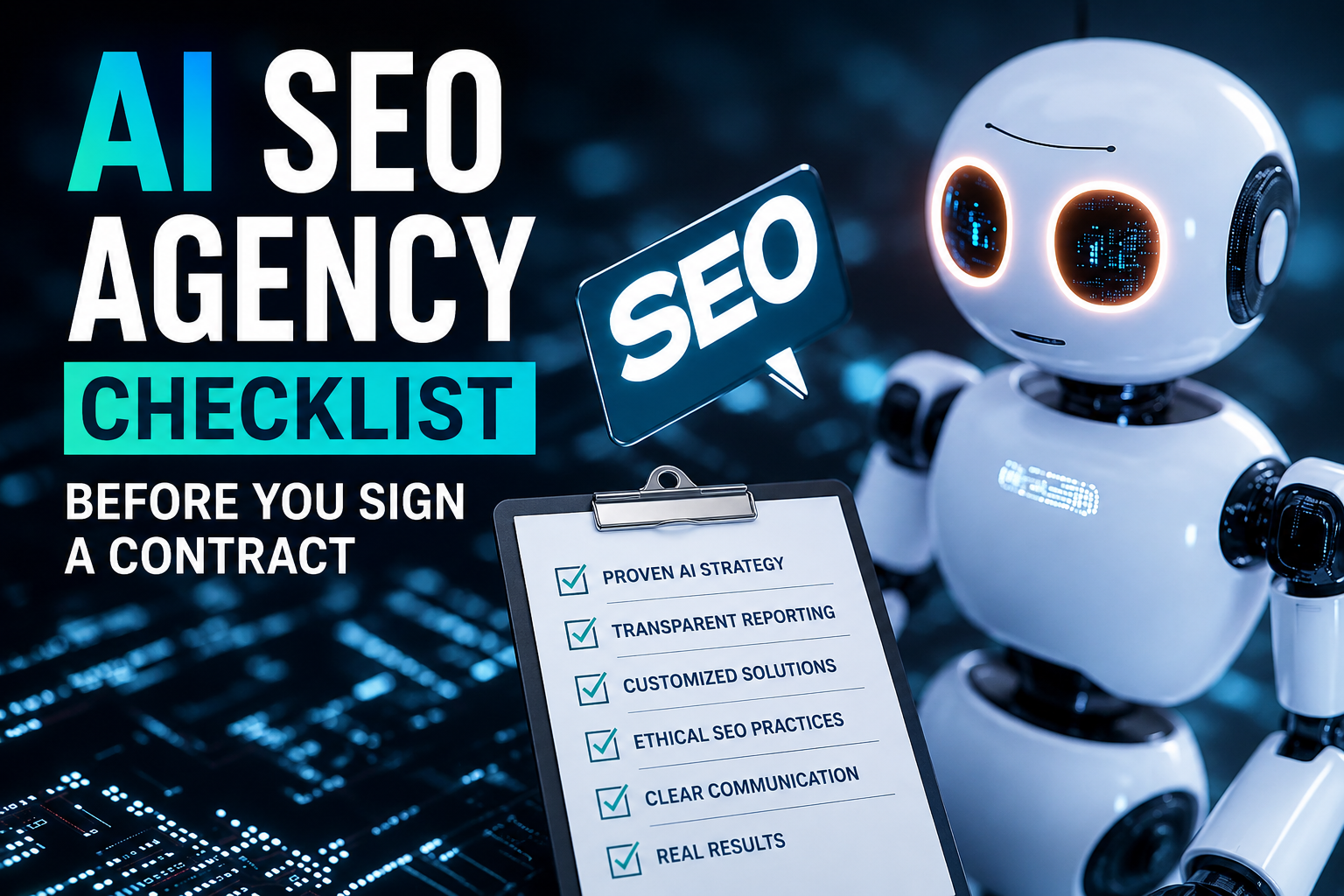
Digital Promenade Objective This post breaks down what actually separates a next-gen AI SEO agency...
Digital Promenade Objective This post breaks down what AI search optimization actually is, how ChatGPT,...
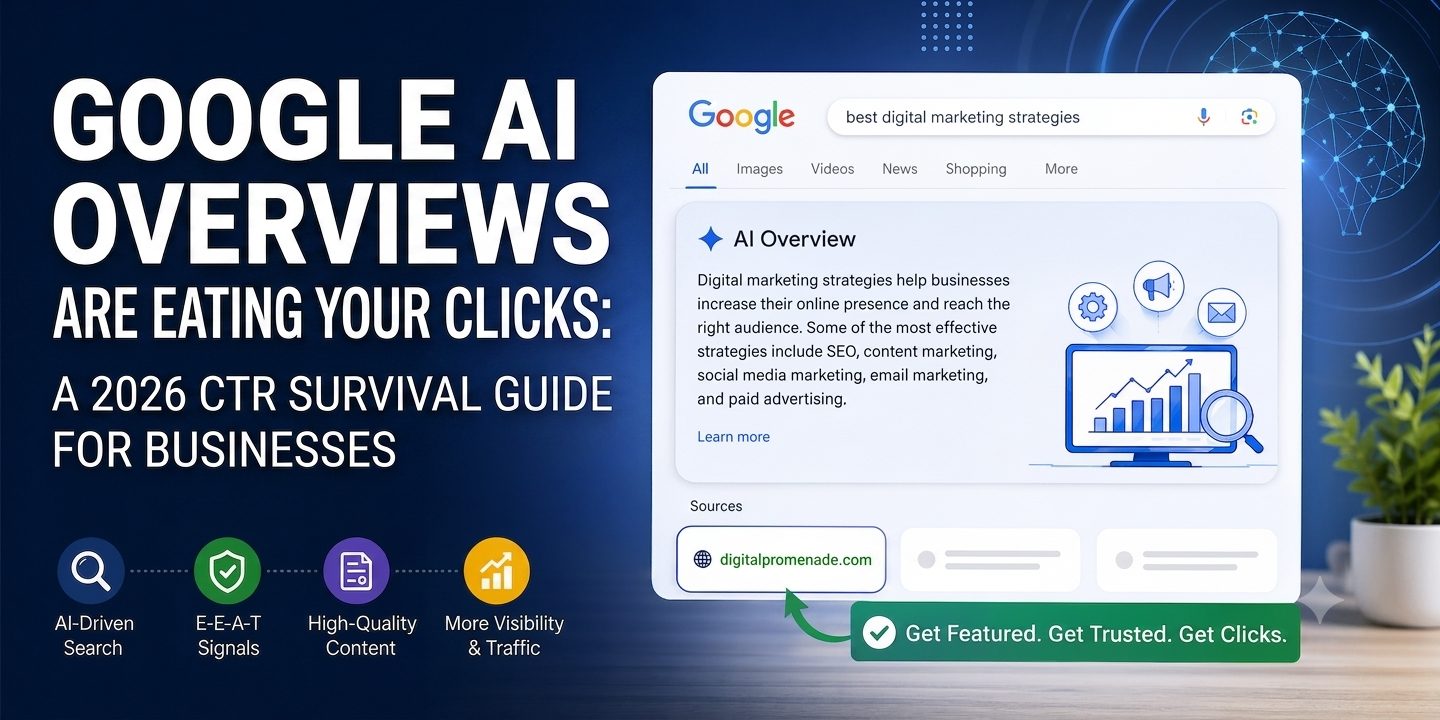
Digital Promenade Objective Google AI Overviews have fundamentally changed what it means to rank on...

Digital Promenade Objective AI agents in SEO are not a future concept – they are...
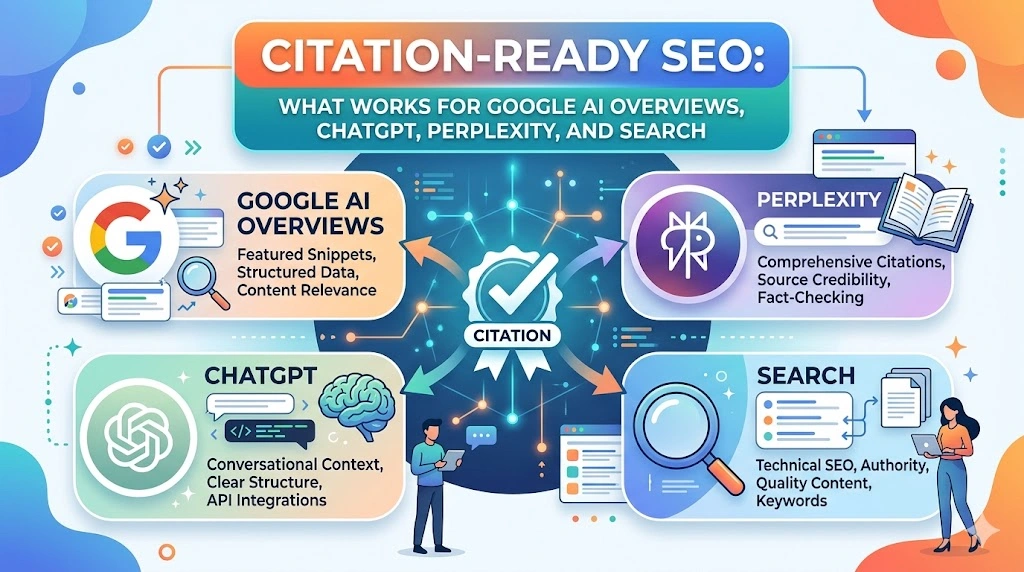
Digital Promenade Objective To get cited in ChatGPT, Perplexity, and Google AI Overviews, build consistent...
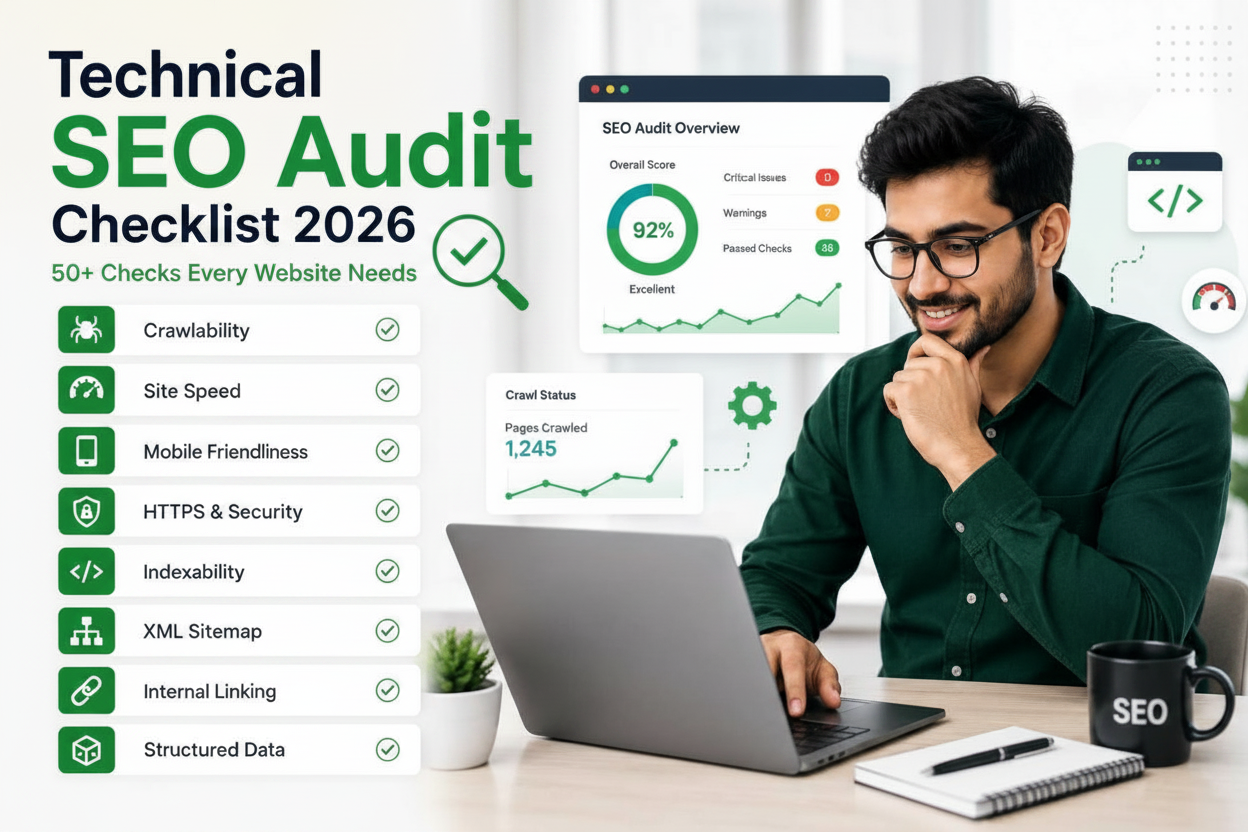
Digital Promenade Objective A technical SEO audit checklist covers crawlability and indexing, site speed and...
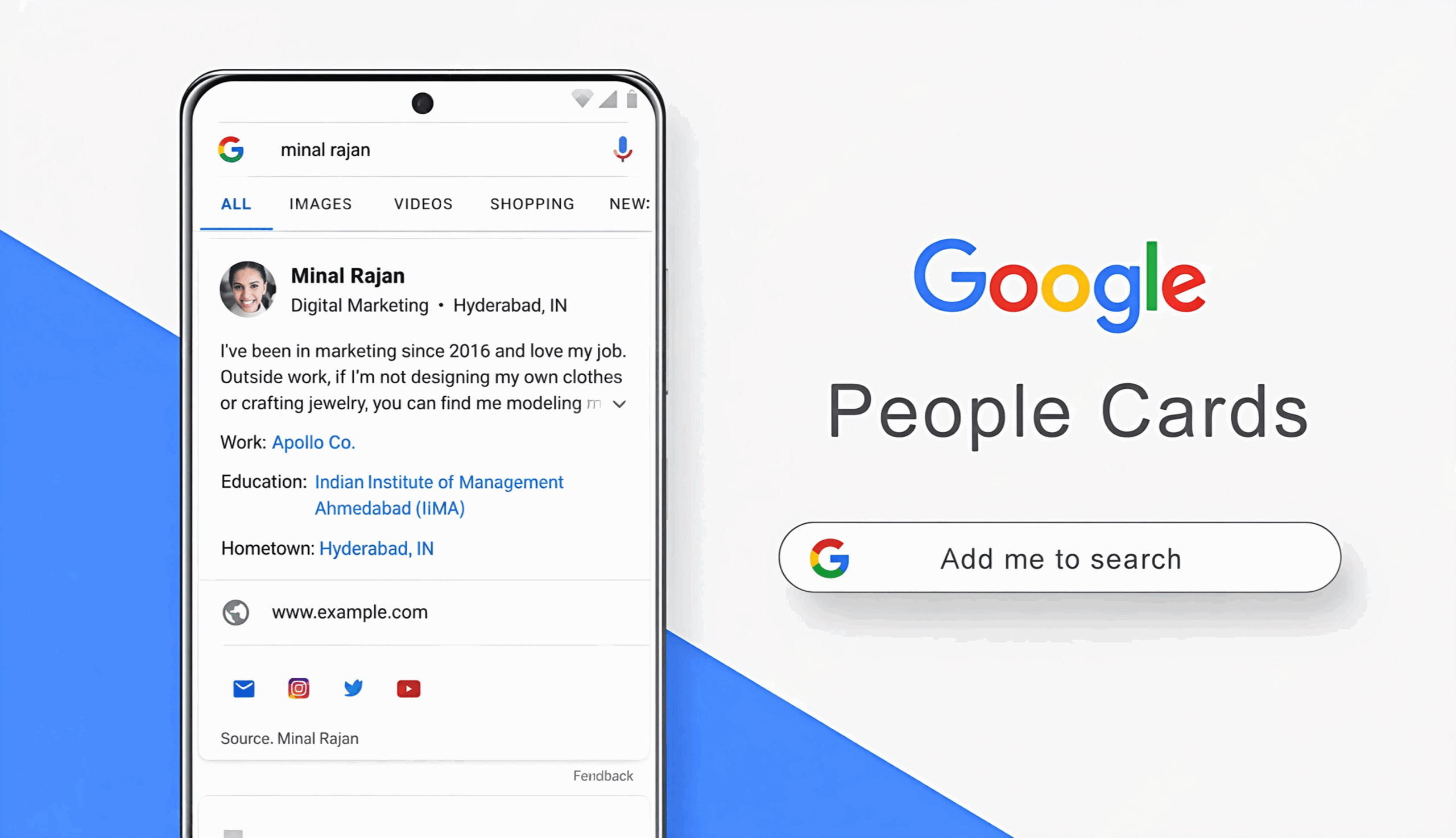
Digital Promenade Objective This blog is a practical, step-by-step guide to Google People Card in...