Digital Promenade Objective This post breaks down what actually separates a next-gen AI SEO agency...
AI Agents in SEO: How Smart Agencies Are Automating Audits, Keyword Research & Reporting in 2026
Digital Promenade
Objective
AI agents in SEO are not a future concept – they are already running audits, clustering keywords, spotting content gaps, and generating performance reports faster than any human team can. The real question is not whether your SEO agency uses AI. It is whether they use it intelligently, with human oversight that translates AI output into actual business decisions.
Key Takeaways
- AI agents for SEO automation go beyond traditional SEO tools by working autonomously, continuously monitoring data, and executing multi-step workflows.
- Modern AI-powered SEO workflows can automate audits, keyword clustering, content gap analysis, competitor tracking, and reporting.
- AI agents help identify technical SEO issues, ranking drops, and content opportunities much faster than manual processes.
- Semantic keyword clustering allows businesses to create content aligned with user intent and the buyer journey.
- AI-driven content gap analysis uncovers high-value topics and competitor opportunities at scale.
- Continuous competitor monitoring enables faster responses to ranking and content changes in competitive markets.
- Automated reporting saves time by transforming complex analytics data into actionable business insights.
- Successful SEO campaigns combine AI efficiency with human expertise, strategic thinking, and decision-making.
- Businesses should evaluate AI-powered SEO agencies based on transparency, human oversight, reporting quality, and real-world AI implementation.
- The future of SEO is not AI replacing experts-it is AI enhancing expert-led strategies to deliver faster, smarter, and more scalable results.
Introduction
Every week, I talk to business owners who are confused about AI in SEO. Most of them have heard the buzzwords – agentic AI, AI-powered SEO automation, autonomous agents – but very few understand what these terms mean in practice. And almost none of them know how to tell whether an agency is genuinely using AI or just slapping the word onto a standard service deck.
This guide breaks it all down. I will explain what AI agents in SEO actually are, how I use them at Digital Promenade to run sharper campaigns for clients, and exactly what questions you need to ask before hiring any agency that claims to be “AI-powered.”
What Are AI Agents in SEO, and How Are They Different from Standard SEO Tools?
Most people confuse AI agents with AI tools, and the difference matters enormously.
An SEO tool like Semrush or Ahrefs is reactive. You log in, ask a question, and get data. You still need a human analyst to interpret that data, decide what to prioritise, and execute the next step. The tool does not remember what it did last month. It does not connect the dots across your entire website. It waits for instructions.
An AI agent for SEO automation is fundamentally different. It operates with a goal, not just a prompt. You give it an objective – say, “monitor our keyword rankings and flag any drop of more than 15 positions” – and the agent continuously runs in the background, checks the data, identifies the anomaly, and either acts or alerts a human. It chains multiple steps together without someone pressing a button each time
The key distinction:
Feature | Standard SEO Tool | AI Agent in SEO |
Operates on demand | Yes | No – runs continuously |
Multi-step reasoning | No | Yes |
Learns from past data | Limited | Yes |
Takes autonomous action | No | Yes (with guardrails) |
Needs human input per task | Yes | No – only for decisions |
What is agentic AI in this context? It refers to AI systems that have a defined objective, use memory to retain context across sessions, and can call multiple tools or APIs in sequence to complete a complex task. In SEO, an agentic AI system might pull your Google Search Console data, check your rankings via an API, cross-reference competitor content, and suggest a content update – all without a human triggering each step.
Quick Skim: AI agents differ from standard tools because they operate autonomously with a goal, chain multiple tasks together, and run continuously. Standard tools wait for human prompts; AI agents act on defined objectives.
How Do AI Agents Actually Work Inside a Real SEO Workflow?
Let me walk you through a concrete example rather than keeping this abstract.
At Digital Promenade, when I onboard a new SEO client, the first step is a comprehensive site audit. Traditionally, this meant an analyst spending two to three days crawling the site, pulling data, and writing a report. Today, an AI-assisted audit framework can complete the technical crawl, categorise issues by severity, pull Search Console data, and cross-reference Core Web Vitals signals in a fraction of that time.
Here is how the workflow looks in practice:
Step 1 – Data ingestion: The AI agent connects to Google Search Console, Google Analytics 4, and a crawling tool. It pulls impressions, clicks, CTR, rankings, crawl errors, and page speed scores simultaneously.
Step 2 – Pattern recognition: The agent identifies anomalies – pages with high impressions but low CTR, pages with crawl errors that previously ranked, content that ranks on page 2 for multiple keywords and could be consolidated.
Step 3 – Prioritisation: Using a scoring model, it ranks issues by estimated traffic impact. A broken internal link on a page that receives 400 visits per month ranks higher than a meta-description issue on a page with 10 visits.
Step 4 – Recommendation output: The agent generates a structured report with specific recommendations, each mapped to a business outcome (traffic, conversions, visibility).
Step 5 – Human review: My team reviews the output, applies contextual judgement – does this change align with the client’s sales cycle? Is this keyword actually converting? – and then implements.
The AI handles the volume. My team handles the strategy.
Quick Skim: In a real workflow, AI agents connect to your analytics data, identify patterns and anomalies, prioritise by business impact, and produce structured recommendations – all before a human strategist reviews and decides what to action.
What Tasks Can AI Agents for SEO Automation Handle in 2026?
Automated Site Audits
AI-driven SEO audits go beyond a simple crawl report. A well-configured AI agent checks technical health across hundreds of parameters – broken links, redirect chains, duplicate content, schema errors, Core Web Vitals scores, canonical issues, and mobile usability problems – and surfaces them in a prioritised queue. I use automated audits as a baseline every month, so no client site silently degrades between quarterly reviews.
According to Google’s Search Central documentation, many technical issues that hurt rankings go unnoticed for months simply because manual checks cannot keep up with site changes. Continuous SEO monitoring via AI agents solves this directly.
AI Keyword Research
Traditional keyword research involves pulling a seed list, expanding it, checking volumes, and manually grouping terms by topic. AI agents now handle the entire clustering process – grouping keywords by semantic relationship and search intent, not just surface-level similarity. This is critical because Google’s ranking systems understand topics, not just keywords.
The practical output: instead of a flat list of 200 keywords, I get an intent-mapped cluster where each group corresponds to a specific stage of the buyer journey. Informational clusters feed into blog content. Commercial clusters inform landing page copy. Transactional clusters drive PPC ad groups.
AI Content Gap Analysis
Content gap analysis used to mean manually comparing your site’s content against three or four competitors. AI-assisted content gap analysis scales this to dozens of competitors across hundreds of topic clusters simultaneously. The agent identifies topics your competitors rank for that you do not, estimates the traffic opportunity for each, and recommends where to build topical authority first.
At Digital Promenade’s SEO service, this gap analysis becomes the foundation of every content roadmap I build for clients.
Automated Competitor Analysis SEO
Competitor monitoring is one of the highest-value applications of AI agents in SEO. Instead of manually checking competitor rankings every week, an AI agent tracks competitor keyword movements, spots when a competitor publishes new content targeting your core keywords, and alerts the team when a competitor gains significant ground. This allows proactive response rather than reactive catch-up.
Reporting Automation
Reporting is one of the most time-consuming parts of running an SEO campaign. An AI-driven reporting layer connects to GA4, Search Console, and rank tracking tools and produces a client-ready report on a set schedule. The report highlights wins, flags concerns, and explains the month’s activity in plain language. This frees my team to spend time on strategy rather than spreadsheet formatting.
Quick Skim: In 2026, AI agents for SEO automation handle five core tasks: continuous site audits, semantic keyword clustering, multi-competitor content gap analysis, real-time competitor rank monitoring, and automated performance reporting – all with human strategy layered on top.
How Does Digital Promenade Use AI-Assisted SEO for Client Campaigns?
I want to be specific here because most agencies speak about AI in vague, aspirational terms. Here is what I actually do.
Keyword research: I use AI-powered clustering to map keywords to buyer intent stages before writing a single word of content. This means every piece of content I create has a clear job – attract, educate, or convert.
Content strategy: I run AI content gap analysis against the top five competitors for every client niche. The output tells me exactly which topics have the highest traffic potential and the lowest competitive difficulty. I then build a content calendar around those opportunities.
Technical monitoring: I run monthly automated audits for every client and check the output against the previous month’s baseline. If a crawl error appears on a high-traffic page, I know within 48 hours rather than at the next quarterly review.
Reporting: Every client receives a monthly performance dashboard that pulls directly from their analytics data. I include a plain-language summary of what changed, why it changed, and what the next priority action is.
The critical point: every AI output is reviewed by a dedicated account manager before it reaches the client. The AI handles the data volume. The manager handles the judgement. Both are essential.
You can explore Digital Promenade’s full SEO offering to understand how this process translates into campaign structure.
Quick Skim: Digital Promenade’s AI-assisted SEO process covers intent-mapped keyword clustering, gap-driven content planning, monthly automated audits, and plain-language reporting – all reviewed by a dedicated manager before reaching the client.
What Should You Look for in an "AI-Powered" SEO Agency?
This is where most business owners get misled. Every agency now claims to be AI-powered. Here are the specific questions you need to ask to separate genuine capability from marketing language.
Question 1: What AI tools or agent frameworks do you use, and what tasks do they run autonomously? A genuine answer names specific tools or describes an internal framework. A vague answer like “we use AI to enhance our process” is a red flag.
Question 2: Who reviews the AI output before it influences my campaign? The right answer is a named person with specific expertise. If the agency implies the AI makes final decisions, that is a problem. AI agents surface data; humans make strategic calls.
Question 3: How does AI automation affect my reporting frequency and transparency? Good agencies use AI to make reporting more frequent and more granular, not less transparent. If AI is mentioned as a reason to reduce reporting, walk away.
Question 4: Can you show me an example of an AI-generated audit report and the subsequent actions taken? This separates agencies that generate reports from agencies that act on them.
Question 5: What does your dedicated account manager do that the AI cannot? The answer should describe contextual judgement, client communication, and strategic prioritisation – things AI cannot yet replace.
Quick Skim: When evaluating an “AI-powered” SEO agency, ask specifically what tasks run autonomously, who reviews AI output, how it affects reporting, and what the human manager’s role is. Vague answers to these questions signal AI is being used as a marketing claim rather than a genuine operational capability.
The Human + AI Combination: Why a Dedicated Manager Still Matters
I hear this concern often: “If AI agents handle the audits and keyword research, what am I actually paying a team for?”
The answer is everything that requires judgement.
An AI agent can identify that a page’s CTR dropped 30% after a content update. It cannot tell you whether that drop matters more or less than a competing priority – say, a product launch that needs landing page copy this week. It cannot understand that the client’s sales team told you last Tuesday that they are no longer pursuing enterprise accounts, which changes the entire keyword strategy. It cannot explain the ranking drop to a business owner in a way that builds trust and sustains a long-term relationship.
At Digital Promenade, my USP is the combination of a dedicated account manager – a real person who knows your business, your goals, and your competitive landscape – backed by AI-assisted tools that give that manager better data, faster. The AI handles the scale. The manager handles the strategy, the communication, and the decisions.
This is what I mean when I say “KPI-driven campaigns.” The KPIs are set by a human who understands your business. The AI monitors progress toward them continuously.
Quick Skim: AI agents handle data volume and continuous monitoring, but dedicated human managers provide the contextual judgement, strategic prioritisation, and client communication that AI cannot replicate. The combination – not the AI alone – is what produces results.
Quick Comparison: Traditional SEO Agency vs. AI-Assisted SEO Agency
Function | Traditional Agency | AI-Assisted Agency (Digital Promenade) |
Site audit | Quarterly, manual | Monthly, automated + human review |
Keyword research | Manual clustering | Semantic, intent-mapped clustering |
Competitor monitoring | Ad hoc | Continuous, automated alerts |
Content gap analysis | 3-5 competitors | 10+ competitors, AI-scaled |
Reporting | Monthly PDF | Real-time dashboard + monthly narrative |
Response to ranking changes | Reactive (next meeting) | Proactive (within 48 hours) |
Human involvement | High across all tasks | Focused on strategy and decisions |
Campaign speed | Slower to adapt | Faster to adapt |
Frequently Asked Questions
No. AI agents operate autonomously with a goal and chain multiple tasks together without human prompting at each step. Tools like Semrush or Ahrefs are powerful data sources, but a human still has to log in, pull the data, and decide what to do with it. An AI agent can be connected to those same data sources and perform a sequence of analysis steps automatically based on a defined objective - for example, "monitor rankings daily and flag any page that drops more than 20 positions, then pull the page's current content and identify the most likely cause.
Think of it this way: Semrush is like a very advanced calculator. An AI agent is like a junior analyst who runs the same calculations every day, spots anomalies, and brings the relevant ones to your attention without being asked.
AI-powered SEO automation is, if anything, more valuable for small businesses than for large ones. A large enterprise has dozens of analysts. A small business typically has one person handling marketing alongside ten other responsibilities. AI agents allow that one person - or a lean agency team - to monitor and optimise at a scale that previously required a much larger headcount. At Digital Promenade, I work with small businesses in Noida, Delhi NCR, and the UK who benefit from the same automated audit and reporting frameworks I use for larger clients.
Agentic AI refers to AI systems that act with autonomy toward a goal, rather than simply responding to a single prompt. Regular AI (like a chatbot answering a question) is reactive - it responds when prompted. Agentic AI is proactive - it sets a goal, breaks it into steps, uses tools and data to complete those steps, and persists until the goal is achieved. In SEO, an agentic AI system might be given the goal "identify and fix all technical issues preventing page indexation" and then autonomously crawl the site, check Search Console coverage reports, identify patterns in the errors, and produce a fix list - all in a single run.
For most small to medium businesses, a full automated audit once a month and a lightweight crawl check weekly is sufficient. For e-commerce sites with thousands of product pages, or news sites where content is published daily, continuous crawl monitoring makes sense. The right frequency depends on how fast your site changes and how quickly you can act on issues identified.
It means the agency does different work. AI handles data collection, pattern recognition, and report generation. This frees the human team to spend more time on strategy, competitive thinking, content quality, and client communication - the work that actually differentiates campaigns. An agency using AI well should be able to handle more clients at a higher quality level, not the same clients with less effort.
Ask for a live demo of their reporting process. Ask to see a raw AI audit output alongside the human commentary added on top. Ask how quickly they would detect and notify you if a high-traffic page dropped out of rankings tomorrow. If the answer is "we would catch it in our next monthly report," they are not using continuous AI monitoring. Real AI-assisted workflows produce faster detection and faster response.
Conclusion
AI agents in SEO represent a fundamental shift in how search optimisation works – not because they replace human expertise, but because they scale it. The agencies that combine genuine AI-powered SEO automation with experienced human oversight will outperform those relying purely on manual processes.
If you are looking for an agency that builds your SEO strategy on real data, automated monitoring, and a dedicated account manager who understands your business – get in touch with Digital Promenade. I would be glad to walk you through how this works in practice for a business like yours.
Know Your Digital Goals
Digital Promenade Objective This post breaks down what AI search optimization actually is, how ChatGPT,...
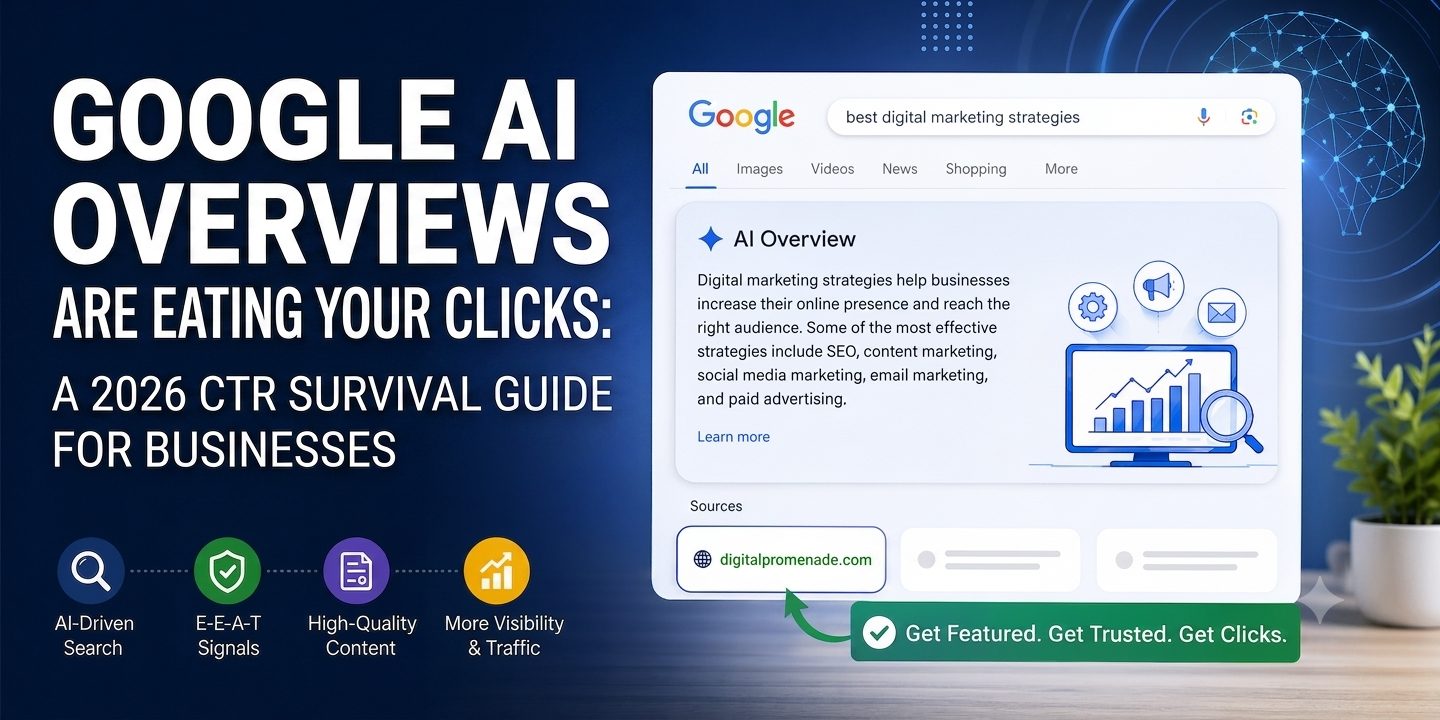
Digital Promenade Objective Google AI Overviews have fundamentally changed what it means to rank on...
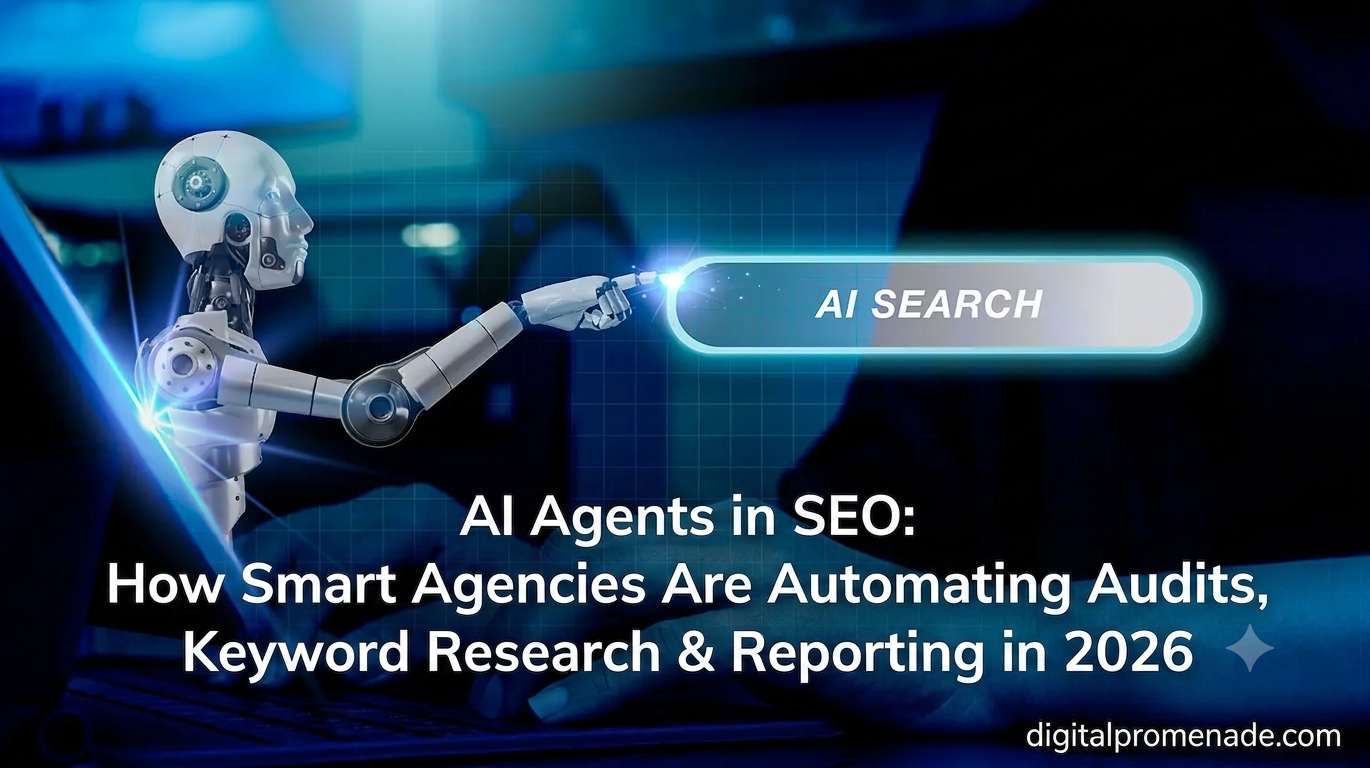
Digital Promenade Objective AI agents in SEO are not a future concept – they are...
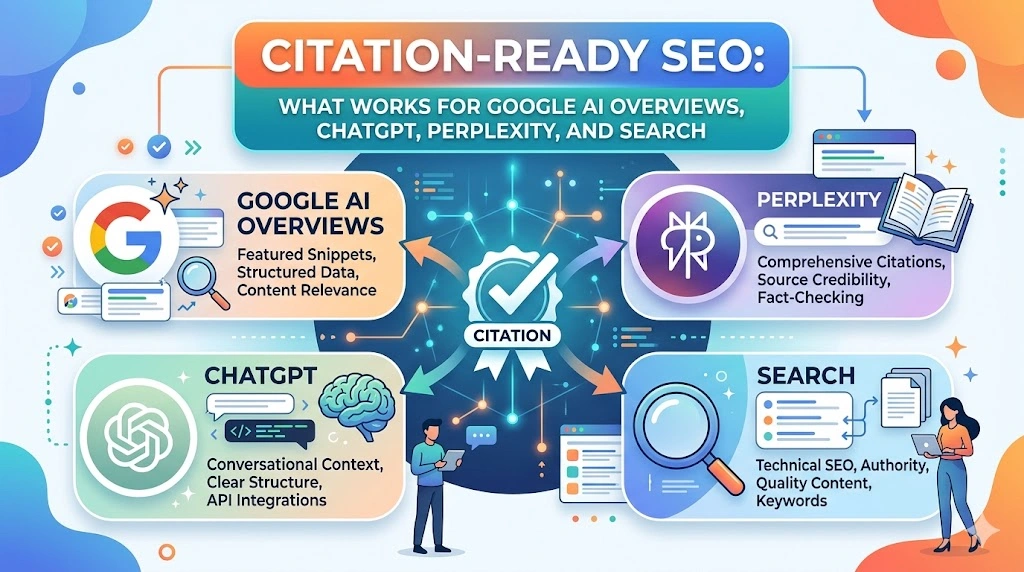
Digital Promenade Objective To get cited in ChatGPT, Perplexity, and Google AI Overviews, build consistent...
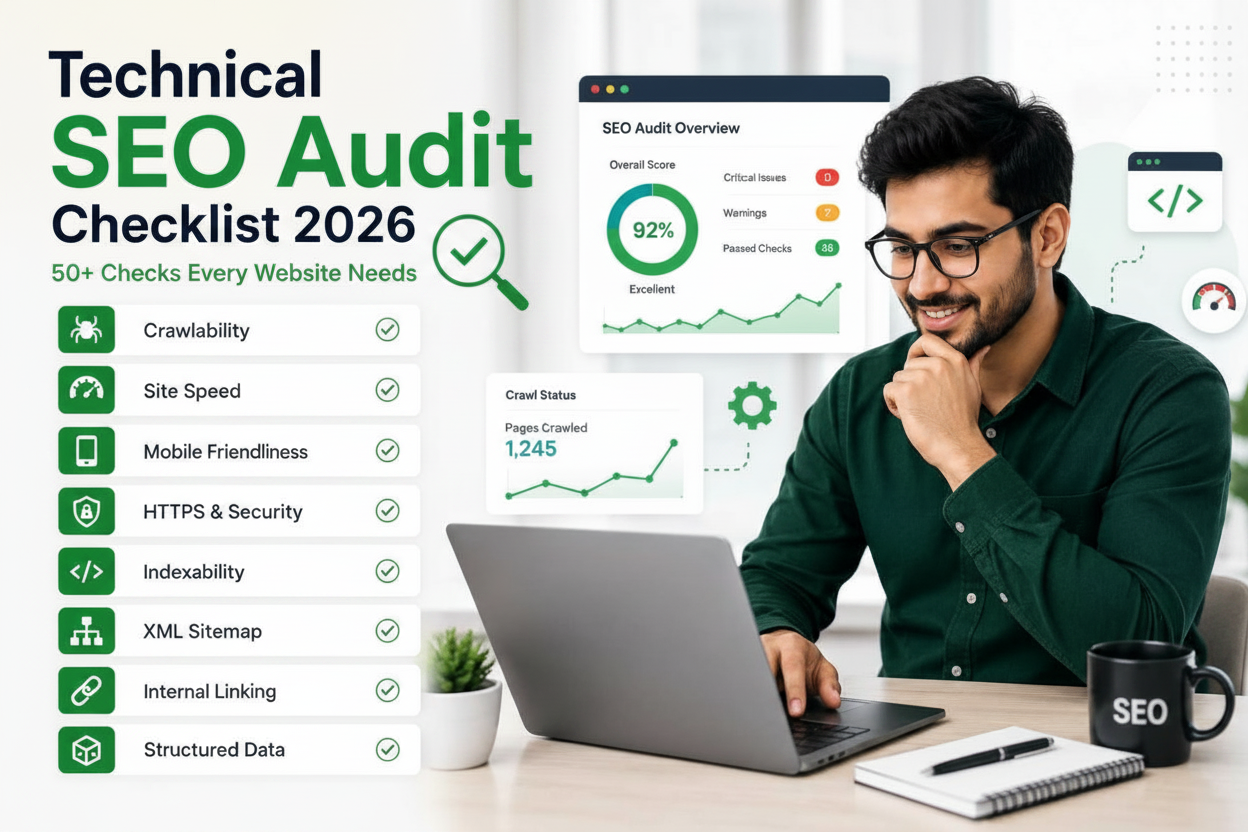
Digital Promenade Objective A technical SEO audit checklist covers crawlability and indexing, site speed and...
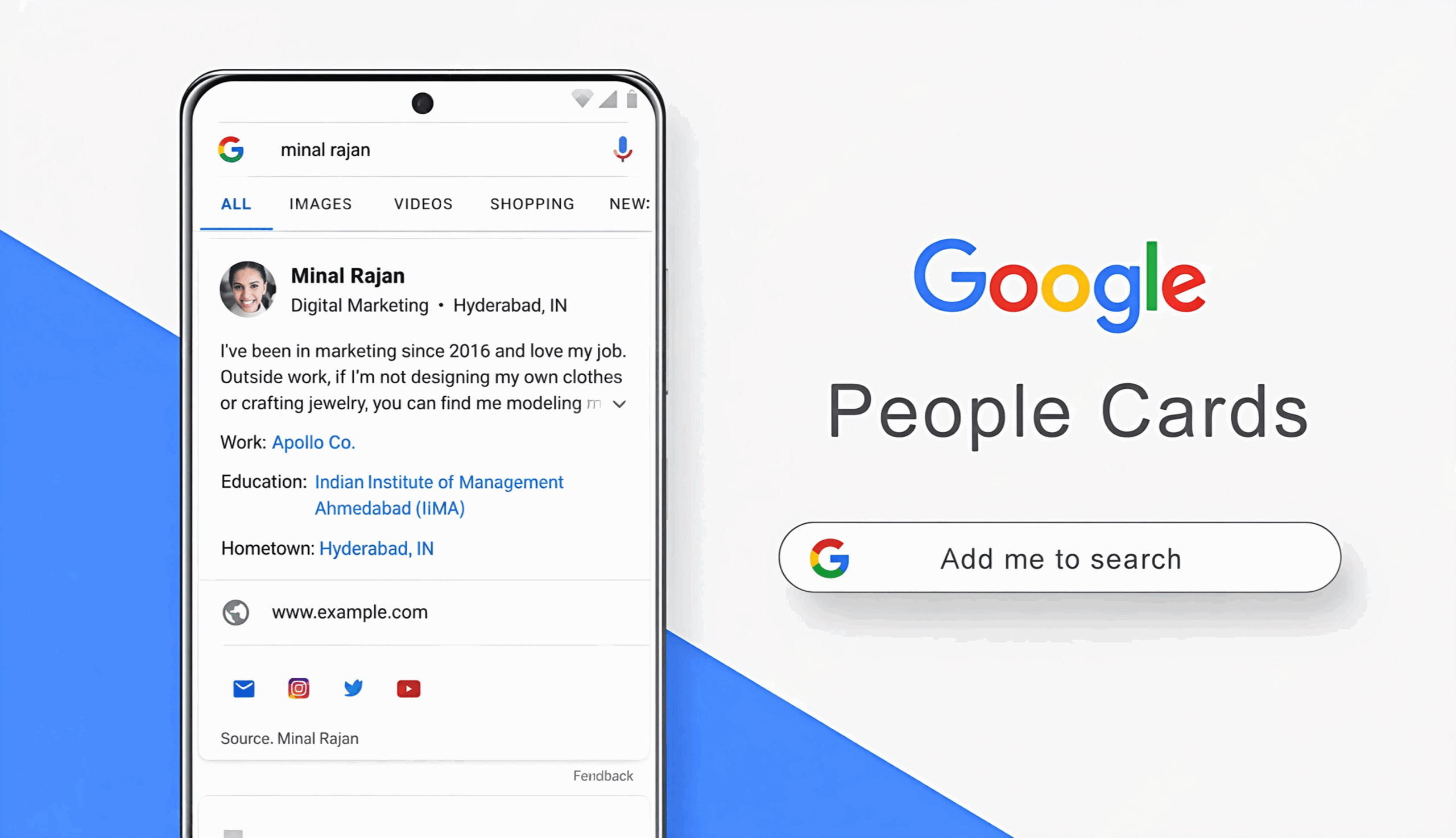
Digital Promenade Objective This blog is a practical, step-by-step guide to Google People Card in...

Digital Promenade Objective This blog helps businesses in Noida and Delhi NCR understand what separates...

Digital Promenade Objective This blog explains why SEO is important for B2B companies specifically –...

Digital Promenade Objective This blog explains how SEO and social media can work as complementary...