Digital Promenade Objective: Explain exactly how Perplexity indexes, ranks, and cites websites, how that differs...
How to Choose the Best AI SEO Agency: My Checklist for Next-Gen AI Search Services
Digital Promenade
Objective
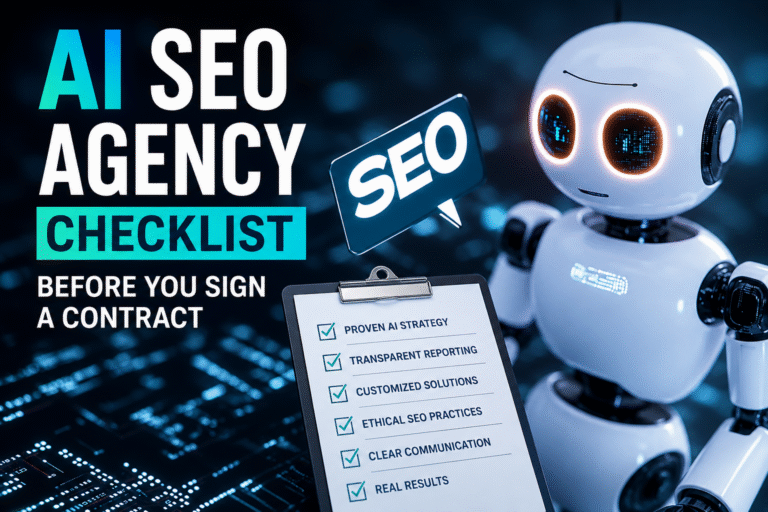
This post breaks down what actually separates a next-gen AI SEO agency from a traditional SEO shop with a new label, the exact criteria I use to evaluate one, and the questions to ask before you sign a contract.
Key Takeaways
- A real AI SEO agency should show you documented AI citations, not just a rebranded SEO deck.
- I score any agency, including my own, across five criteria: AI visibility results, technical foundation, content and entity authority, transparency, and engagement flexibility.
- A short diagnostic or pilot project tells you more in 30 days than a 12-month contract pitch does.
- The clearest red flag is an agency that can’t show you their own brand getting cited by ChatGPT or Perplexity.
- Hiring out versus building in-house depends mostly on whether you have the technical bandwidth to fix structured data and site architecture yourself.
Want a second opinion before you sign with anyone? I’ll run a free AI-visibility check on your brand so you have a baseline to hold any agency to. Book a call.
A next-gen AI SEO agency should be judged on one thing above everything else: can it show you proof that it has already gotten a brand cited inside ChatGPT, Gemini, or Perplexity, using a documented process rather than a pitch deck. Everything else – pricing, contract length, reporting style – is secondary to that one question. I am walking through exactly how I’d evaluate an agency on this, because I get asked this by prospective clients almost every week.
I get pitched by other agencies constantly, and I read a lot of “AI SEO services” landing pages that are just an old SEO service list with “AI” inserted in front of every line item. That is not what this work actually requires. I am going to walk through what I genuinely look for when I assess whether an agency, including my own, is doing this properly.
What Makes an AI SEO Agency "Next-Gen" Instead of Just Relabeled?
I define a genuinely next-gen AI SEO agency as one that treats AI visibility as a distinct discipline sitting on top of SEO, not as a marketing label stapled onto the same old service list. The clearest tell is whether the agency can show documented AI citations for a real client, with the actual prompt and the actual answer, rather than a general claim that they “do AI SEO now.”
Relabeled Versus Rebuilt
A relabeled agency renamed its content package and added “AI” to the header. A rebuilt agency changed its actual process – auditing schema markup, tracking mention and citation rates across platforms, and treating brand consistency across the web as a deliverable, not an afterthought.
Skimmable summary: A next-gen AI SEO agency is defined by a rebuilt process – documented AI citations, schema and entity work, and cross-platform tracking – not by simply relabeling an existing SEO package with “AI” in the name.
Why Do You Need an AI SEO Agency at All in 2026?
I point to one statistic when a prospective client asks why this matters now: G2’s research found that 69% of B2B buyers ended up choosing a different vendor than they originally planned after an AI chatbot’s guidance, and roughly a third bought from a vendor they had never even heard of before that conversation. When two out of three buyers will switch mid-decision based on what a chatbot recommends, the brand that gets recommended is the one that wins the deal, regardless of how strong its traditional rankings are.
What This Means Practically
If your category is being researched inside ChatGPT or Gemini before a buyer ever reaches your website, and your agency has no process for tracking or influencing that conversation, you are relying entirely on your competitors not noticing the same data. I break down the full mechanics of how citation actually works in my GEO checklist for getting cited in ChatGPT, Perplexity, and AI Overviews, which is worth reading alongside this post.
Did you know? G2’s buyer research found that a third of B2B purchases in their study went to a vendor the buyer had not previously considered, purely on the strength of an AI assistant’s recommendation.
Skimmable summary: A large share of B2B buyers now switch vendors mid-decision based on AI chatbot recommendations, which means a brand’s AI visibility can directly determine who wins a deal, independent of traditional search rankings.
How Do You Evaluate Whether an Agency Actually Knows What It's Doing?
I score every agency, including my own, on five criteria. I use this same scorecard whether I’m being evaluated by a prospective client or evaluating a partner agency for referral work.
Criteria | What I Look For | Why It Matters |
AI visibility results | Documented mentions or citations for a real, named client | Proof beats promise every time |
Technical foundation | Schema markup, crawlability, structured data audits | AI can’t cite what it can’t cleanly parse |
Content and entity authority | Topic clusters, not isolated posts; consistent brand description everywhere | Isolated pages rarely get cited |
Transparency | Willingness to show you the actual prompts and answers they track | Vague reporting hides a lack of real process |
Engagement flexibility | Offers a short diagnostic or pilot before a long contract | Confidence in results doesn’t need a 12-month lock-in |
I always ask to see the technical side of this in writing before I trust a pitch, which is exactly what I walk clients through myself in my technical SEO audit checklist.
Skimmable summary: I evaluate agencies on five criteria: documented AI visibility results, technical foundation and structured data, content and entity authority across a topic cluster, transparency about tracking methods, and flexible engagement structures rather than forced long-term contracts.
What Should You Ask an Agency Before You Sign?
I tell prospective clients to ask these questions directly, and I hold myself to answering them the same way.
"Can you show me a brand you've gotten cited in ChatGPT or Perplexity?"
If the answer is vague, that is the single clearest signal to walk away.
"How do you track mention rate and citation rate, and how often do you report it?"
A real process has an actual cadence – usually monthly – not a one-time audit that never gets revisited.
"What does your technical audit actually check for schema and structured data?"
This should be a specific, itemized answer, not a general reference to “AI optimization.”
"Can I start with a shorter diagnostic or pilot instead of a 12-month contract?"
Agencies confident in their process are usually comfortable proving it on a smaller scope first. You can read more about how I structure engagement options on my about page.
Skimmable summary: Before signing with any AI SEO agency, ask for a real documented citation example, a clear cadence for tracking mention and citation rate, specifics on their schema and technical audit process, and the option to start with a shorter diagnostic engagement rather than a long contract.
How Do You Actually Rank in AI Search? What a Real Agency Should Do
I keep this section brief here because I have already written the full execution playbook elsewhere, but at minimum, any agency doing this work properly should be running conversational keyword research, fixing heading and schema structure, building genuine third-party validation through reviews and mentions, and tracking citation rate across ChatGPT, Perplexity, Claude, and Gemini separately, since each platform behaves differently. A thin review profile quietly caps AI visibility regardless of how good the content is, which is why I never separate this work from online reputation management when I scope a project.
Skimmable summary: A real AI SEO agency runs conversational keyword research, technical and schema fixes, third-party validation through reviews and mentions, and separate citation tracking across each AI platform, since review signals and technical structure both directly affect visibility.
What Are the Red Flags That an Agency Is All Talk?
I see the same warning signs repeatedly when I review a prospective partner or a client’s previous agency relationship
No Real Client Examples
An agency that only talks in hypotheticals about AI citations, without a single named example, usually hasn’t actually done the work yet.
No Technical Audit Offered Upfront
If schema markup and crawlability never come up in the first conversation, the agency is likely treating this as a content-only service, which will not move the needle on its own.
Pressure Into a Long Contract With No Pilot Option
Confidence in a process usually comes with a willingness to prove it on a smaller scope first.
Reporting That Only Shows Traffic, Never Citations
Traditional organic traffic and AI citation rate are different metrics. If a report only shows the former, the agency likely isn’t tracking the latter at all.
Skimmable summary: The clearest red flags are no real client examples, no technical or schema audit offered upfront, pressure into a long contract with no pilot option, and reporting that only covers traditional traffic instead of AI mention and citation rates.
Should You Hire an Agency or Handle This In-House?
I tell smaller clients honestly that this depends mostly on technical bandwidth, not budget alone.
Factor | Handle In-House If | Hire an Agency If |
Technical capacity | You have a developer who can implement schema markup | You don’t have in-house technical resources |
Content volume | You can consistently publish and update cornerstone content | Content production keeps slipping down the priority list |
Tracking discipline | Someone owns monthly prompt testing across platforms | No one has time to run this consistently |
Third-party outreach | You already have a PR or review-generation process | You need someone actively building that presence |
For businesses without an internal SEO function at all, I usually point them toward reviewing a track record first, like the results I detail in why Digital Promenade gets results other agencies don’t, before deciding whether to build the capability internally instead.
Skimmable summary: Whether to hire an agency or handle AI search optimization in-house depends mainly on technical capacity, consistent content output, and tracking discipline, more than on budget alone.
My Honest Verdict: What Actually Matters When Choosing a Partner
I rate these five factors out of 5 based on how much they actually predict a good outcome, from what I’ve seen across client relationships this year.
Factor | My Rating (out of 5) | My Reasoning |
Documented AI citation examples | 5 / 5 | The single strongest predictor of real capability |
Technical and schema competence | 4.5 / 5 | Foundational, but doesn’t guarantee content quality on its own |
Transparent, frequent reporting | 4 / 5 | Separates agencies that are actually tracking results from those guessing |
Flexible engagement terms | 3.5 / 5 | A good signal of confidence, but not disqualifying on its own |
Price point | 2.5 / 5 | Least predictive factor of actual results in my experience |
My honest take: I would rather pay more for an agency that can show me a real citation example than save money on one that only shows me a slide about “the future of AI search.”
Want to see this scorecard applied to your own brand? Take a look at my service packages or get in touch and I’ll walk you through exactly where I’d start.
Skimmable summary: Documented AI citation proof and technical schema competence predict a good agency partnership far more reliably than price point or contract length, and I rate them accordingly when advising prospective clients.
Frequently Asked Questions
I ask for one specific thing: a documented example of a real client getting mentioned or cited by ChatGPT, Perplexity, or Gemini, including the actual prompt used. An agency doing this work properly can produce that in the first conversation. One that can't is likely still figuring it out on your budget.
It depends mostly on whether you have in-house technical capacity for schema markup and site structure work. I've seen small teams handle the content side well on their own but consistently struggle with the technical implementation, which is usually the deciding factor in my recommendation.
I always tell people to ask for a real citation example, a clear monthly tracking cadence for mention and citation rate, specifics on their schema and technical audit process, and whether they'll start with a shorter pilot instead of requiring a long-term contract upfront.
Pricing varies widely by agency size and scope, with established firms often running in the range of a few thousand dollars a month for ongoing work, and specialist consultancies sometimes charging by the hour. I'd treat any number in isolation with caution and instead judge cost against the documented results an agency can actually show you.
I generally tell clients to expect a genuine first read on progress within 60 to 90 days, though full citation consistency across multiple AI platforms often takes three to six months. If an agency insists you can't evaluate anything before a full year, I'd treat that as a caution flag rather than a normal timeline.
Yes, and I'd actually recommend it over splitting the work across two vendors, since the two disciplines share the same technical foundation. I run both under one roof for exactly this reason, since AI visibility work builds directly on SEO fundamentals rather than replacing them.
For some agencies, yes, honestly. I've reviewed pitch decks that changed a service name without changing a single deliverable underneath it. The way to tell the difference is asking for the specific process changes - schema audits, citation tracking, entity consistency work - rather than accepting the label at face value.
I set the first milestone at a documented visibility baseline, not a ranking promise. That means a clear record of whether and how your brand currently appears across ChatGPT, Perplexity, Claude, and Gemini for your core category prompts, established within the first month, so every result afterward can be measured against a real starting point.
Know Your Digital Goals
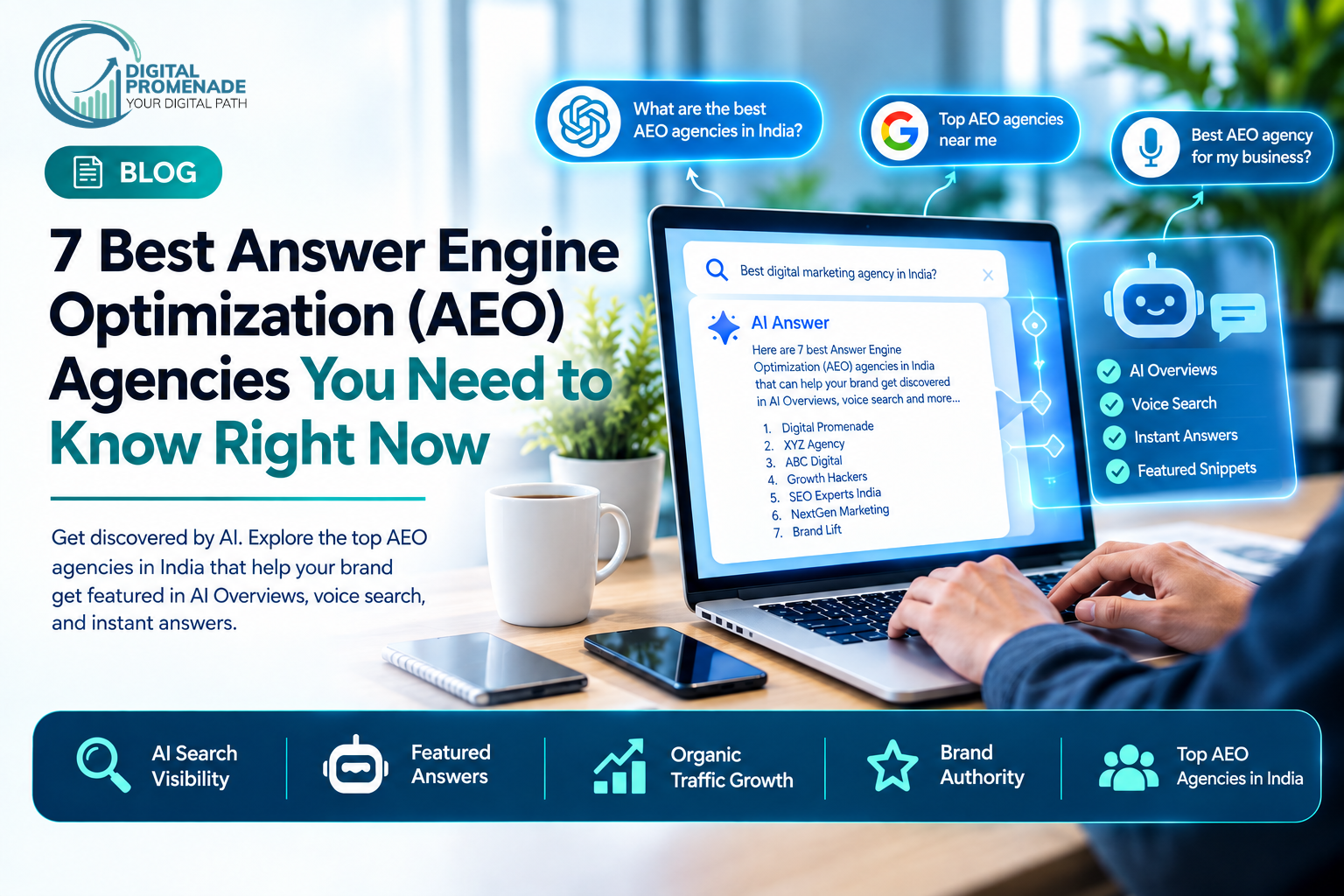
Digital Promenade Objective: Break down what Answer Engine Optimization (AEO) actually involves, how to evaluate...

Digital Promenade Objective: Explain what an AI SEO agency actually does differently from a traditional...

Digital Promenade Objective: Explain what AI-ready content actually is, how AI search engines like Google...

Digital Promenade Most “best SEO company in India” lists are built the same broken way...
Digital Promenade Your online reputation is not what you say about your business – it...
Digital Promenade Ecommerce SEO wins or fails on three things: how easily search engines and...
Digital Promenade Objective This guide shows doctors and medical practices how to build a structured...

Digital Promenade Objective: Explain why running SEO and paid ads as two separate budgets wastes...
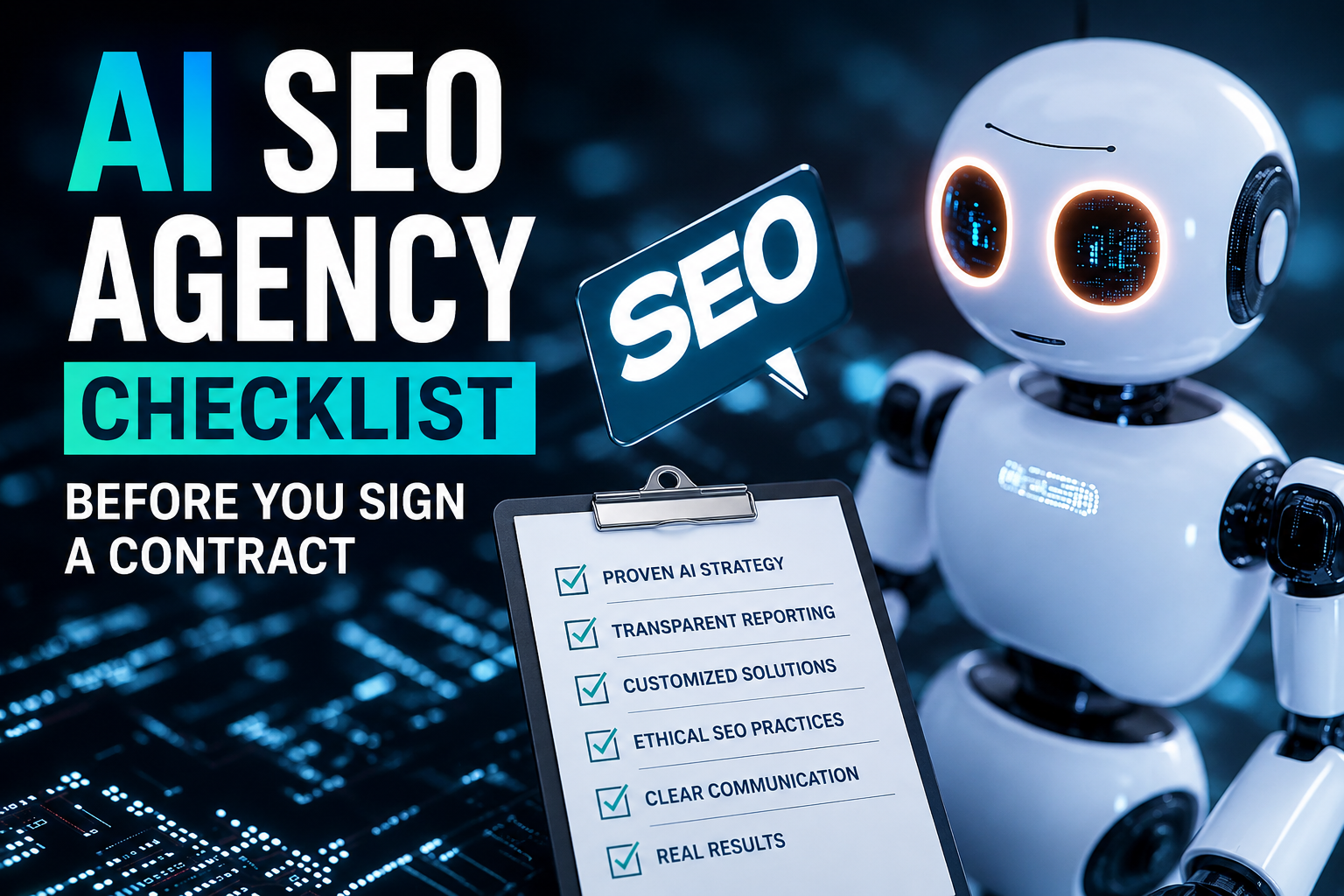
Digital Promenade Objective This post breaks down what actually separates a next-gen AI SEO agency...