

Digital Promenade Ecommerce SEO wins or fails on three things: how easily search engines and...
In-Depth SEO Techniques to Dominate E-commerce Markets
Digital Promenade
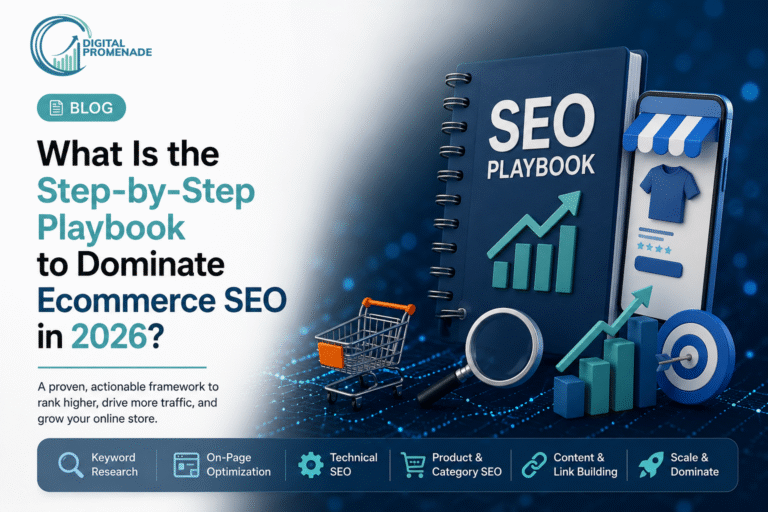
Ecommerce SEO wins or fails on three things: how easily search engines and AI platforms can crawl your product data, how clearly your product and category pages answer buyer questions, and how much trustworthy proof (reviews, citations, backlinks) sits behind your brand. Get these three right and rankings, AI citations, and revenue follow together. Get them wrong and no amount of content volume fixes it.
Most ecommerce stores lose organic visibility for reasons that have nothing to do with content quality. Faceted navigation creates thousands of duplicate URLs. Product pages read like ad copy instead of answering real buyer questions. Reviews go uncollected. Schema markup is missing or broken. None of these are content problems – they are structural and trust problems, and they compound every month they stay unfixed.
This guide breaks down what actually moves rankings and AI visibility for online stores in 2026, based on how search engines and AI platforms like ChatGPT, Gemini, and Perplexity evaluate ecommerce content today.
What Makes Ecommerce SEO Different From Regular SEO?
Ecommerce SEO optimizes product pages, category pages, and buyer-intent content at scale, while regular SEO usually optimizes a smaller set of blog and service pages. An ecommerce site can have thousands of near-identical pages (size, color, and material variants of the same product), which creates duplicate content risk that a typical business website never faces.
Product & Category Pages vs. Blog Content
A service business ranks primarily on blog posts and a handful of service pages. An online store ranks on hundreds or thousands of transactional pages – every one of them needs its own title tag, meta description, unique product copy, and internal links. Treating product pages as an afterthought while investing all effort into blog content is the single biggest reason ecommerce sites underperform in search.
Faceted Navigation and Duplicate Content Risk
Filters for size, color, price, and brand generate URLs like /shoes?color=black&size=9. Search engines can crawl thousands of these low-value combinations instead of your actual product pages, wasting crawl budget and diluting ranking signals. This does not happen on content-only websites, which makes it one of the most ecommerce-specific technical issues to solve early.
Buyer Intent vs. Informational Intent
Someone searching “best running shoes for flat feet” wants a recommendation, not a definition. Ecommerce SEO has to map content to where the buyer sits in their journey – comparison intent, purchase-ready intent, or post-purchase support intent – and build separate pages for each, rather than cramming everything onto one product listing.
Factor | Traditional SEO | Ecommerce SEO | Ecommerce AI SEO |
Primary Pages | Blog posts, service pages | Product, category, and collection pages | Product data, reviews, comparison content |
Main Risk | Thin content | Duplicate content from variants/filters | Missing structured data and stale info |
Core Signal | Backlinks, keyword relevance | Site architecture, crawl budget, UX | Citations, factual accuracy, entity trust |
Target Platforms | Google, Bing | Google Shopping, Google, Bing | ChatGPT, Gemini, Perplexity, AI Overviews |
Content Style | Long-form articles | Concise, spec-driven product copy | Fact-dense, directly quotable answers |
Ecommerce SEO differs from standard SEO because it has to manage scale (thousands of near-duplicate pages), buyer-stage intent, and now a third layer – AI platform visibility – that traditional SEO checklists were never built to handle.
How Do You Audit an Ecommerce Site Before Optimizing It?
You audit an ecommerce site by checking crawlability, indexation status, site architecture depth, and Core Web Vitals on product pages before writing a single word of new content. Optimizing content on a site that Google cannot properly crawl or index wastes effort, since the fixes never get evaluated in the first place.
Crawlability & Indexation Check
Pull your indexed page count from Google Search Console and compare it against your actual product count. A large gap usually means filtered URLs, out-of-stock pages, or thin variant pages are either blocking indexation or eating crawl budget that should go to real product pages. A full technical SEO audit checklist covers the exact checks to run here, including robots.txt rules, canonical tags, and XML sitemap accuracy.
Site Architecture & Category Depth
Every product should sit within three clicks of the homepage. Deep architecture (homepage > category > subcategory > sub-subcategory > product) buries products from both users and crawlers. Flattening this structure, and reinforcing it with internal links from category pages to bestsellers, is one of the fastest architecture fixes on a large catalog.
Core Web Vitals for Product Pages
Product pages load more images, reviews, and third-party scripts (chat widgets, upsell popups, payment badges) than any other page type on a site. Slow Largest Contentful Paint (LCP) on product pages directly affects both rankings and conversion rate, so this is not a technical-team-only concern – it is a revenue concern.
An ecommerce SEO audit exists to find the structural blockers – crawl waste, deep architecture, and slow product pages – that quietly cap organic growth regardless of how good the content strategy is.
What Is the Step-by-Step Playbook to Dominate Ecommerce SEO in 2026?
Dominating ecommerce SEO in 2026 requires ten connected actions: fixing site structure, rewriting product and category pages for clarity, solving duplicate content, adding complete schema, earning real reviews, building authority, optimizing for AI shopping search, handling stock and seasonal changes correctly, and tracking revenue instead of just rankings.
How to implement ecommerce SEO step by step
Step 1: Fix Site Structure & Internal Linking
Group products into logical categories and subcategories that match how customers actually search, not how your warehouse organizes inventory. Link every product page to 3-5 related products and its parent category, and link every category page back to top-selling products within it.
Pro tip: Build a “products linked from category page” audit in a spreadsheet – any product with zero internal links from a category or collection page is functionally invisible to both users and crawlers.
Step 2: Optimize Product Pages for Search + AI Answers
Write product descriptions using exact specifications – material, dimensions, weight, compatibility – instead of vague marketing adjectives like “premium” or “stylish.” Both Google and AI platforms reward factual, specific product copy over promotional language, because specific facts are what buyers and AI systems can actually verify and reuse.
Pro tip: Open with a 40-50 word answer block at the top of every product page stating who it is for, its two or three defining specs, and one direct comparison point against a common alternative.
Step 3: Handle Category & Collection Pages as Answer Pages
Add a 150-200 word introduction above the product grid on every category page that explains what the category covers, who shops it, and how to choose between options. A category page that is only a grid of thumbnails gives search engines and AI platforms nothing to read, cite, or rank.
Pro tip: Add a 3-row comparison table under the intro (e.g., “Budget pick / Best overall / Premium pick“) – this single addition consistently improves both time-on-page and category page rankings.
Step 4: Solve Duplicate Content from Filters/Variants
Set canonical tags on filtered and parameterized URLs pointing back to the main category page. For color/size variants that live on separate URLs, decide once whether they should be indexed separately (only if search demand justifies it) or canonicalized to the primary product URL.
Pro tip: Run a site:yourdomain.com search for one product name – if five near-identical URLs show up, your canonical strategy needs fixing before any content work will help.
Step 5: Build Schema (Product, Review, FAQ, Breadcrumb)
Add Product, Review, AggregateRating, Breadcrumb, and FAQPage schema across product and category pages. Structured data removes the guesswork for both Google’s rich results and AI platforms trying to extract price, availability, and rating data accurately.
Pro tip: Test every template (not just one product) through Google’s Rich Results Test, since a single template error repeats across your entire catalog.
Step 6: Earn Reviews & UGC at Scale
Send a review request 7-10 days after delivery, timed to when the customer has actually used the product, not the day it ships. Reviews that mention specific use cases and outcomes carry more weight with buyers and with AI platforms that reference review content when forming product recommendations.
Pro tip: Ask one specific question in the review request email (“What did you use this for?“) instead of a generic “leave us a review” – specific prompts produce specific, more useful reviews.
Step 7: Build Authority Through Digital PR & Backlinks
Pitch product data, original research, or expert commentary to publications and roundup articles in your niche instead of chasing generic guest posts. A handful of relevant, editorially-earned links from category-specific publications outweighs dozens of low-quality directory links.
Pro tip: Turn your own sales or usage data into one original stat per quarter (“62% of our customers reorder within 90 days“) – original stats get cited far more often than opinion content.
Step 8: Optimize for AI Shopping Search
Confirm AI crawlers (GPTBot, ClaudeBot, PerplexityBot, Google-Extended) are not blocked in robots.txt, then add an llms.txt file listing your public, citable product and guide pages. AI platforms can only recommend products they can access and parse – a blocked crawler removes you from consideration entirely, regardless of how strong your content is.
Pro tip: Ask ChatGPT, Gemini, and Perplexity a real buyer question in your category (“best budget running shoes for flat feet“) and record which brands get cited – that gap list becomes your AI-SEO content priority.
Step 9: Fix Out-of-Stock & Seasonal SEO Handling
Never delete or 404 a page that has ranking history just because a product is temporarily out of stock. Keep the page live, show an accurate “back in stock” date if known, and suggest 2-3 close alternatives instead of sending the visitor and the crawler to a dead end.
Pro tip: For seasonal products, keep the page live year-round with a note like “Back in October 2026” instead of taking it down – rebuilding rankings from zero every season is far more expensive than maintaining one evergreen URL.
Step 10: Track Rankings, Revenue, and AI Citations, Not Just Keywords
Rank tracking alone hides whether SEO is actually paying for the business. Pair keyword position tracking with organic revenue, organic-assisted conversions in GA4, and – increasingly – how often your products get mentioned in AI-generated shopping answers.
Pro tip: Build one monthly dashboard combining organic sessions, organic revenue, and AI mention count in one view – isolated keyword reports make it hard to see which SEO actions actually drove sales.
This ten-step playbook covers the full loop – structure, content, trust signals, and AI visibility – because skipping any one of them leaves a gap competitors will fill first. Site structure and schema get crawlers to your pages; product and category rewrites make those pages worth ranking; reviews and backlinks build the trust that pushes rankings and AI citations higher.
What Are the Most Common Ecommerce SEO Mistakes That Kill Rankings?
The most damaging ecommerce SEO mistakes are blocking crawlers, hiding key product content behind JavaScript, ignoring duplicate content from filters, treating SEO as a one-time project, and leaving product data stale. Each of these silently caps growth even when other parts of the strategy are working well.
Mistake | Why It Hurts | Fix |
Blocking AI crawlers in robots.txt | Removes your products from ChatGPT, Gemini, and Perplexity answers entirely | Allow GPTBot, ClaudeBot, PerplexityBot; add an llms.txt file |
Hiding specs/FAQs in JavaScript tabs | Search engines and AI systems may not render or index hidden content reliably | Keep key specs and FAQs in static, crawlable HTML |
Ignoring filter-generated duplicate URLs | Wastes crawl budget on thousands of low-value pages | Canonicalize filtered URLs to the main category page |
Treating SEO as a one-time setup | Rankings and AI citations decay as competitors update content and data | Review product pages, reviews, and schema on a recurring monthly cycle |
Letting price/stock data go stale | Damages trust with both shoppers and AI platforms citing your data | Sync product feeds weekly for fast-moving SKUs |
Deleting out-of-stock product pages | Loses ranking history that took months to build | Keep the page live with alternatives and a restock date |
Most of these mistakes are structural, not creative – they get baked into a site during development and never get revisited, which is exactly why a recurring technical SEO audit matters more for ecommerce than for almost any other website type.
How Much Do Ecommerce SEO Services Cost in India?
Ecommerce SEO services in India typically range from ₹15,000 to ₹1,50,000+ per month, depending on catalog size, competition level, and whether AI search optimization is included alongside traditional SEO. Larger catalogs and more competitive categories (fashion, electronics) sit at the higher end of that range.
Store Size | Typical Monthly Range (INR) | What It Usually Covers |
Small store (under 100 SKUs) | ₹15,000 – ₹35,000 | On-page optimization, basic schema, monthly reporting |
Growing store (100–1,000 SKUs) | ₹35,000 – ₹80,000 | Category page optimization, review strategy, link building, technical fixes |
Large/enterprise catalog (1,000+ SKUs) | ₹80,000 – ₹1,50,000+ | Full technical SEO, AI search optimization, ongoing content, digital PR |
These figures reflect the general Indian market range as of 2026 and vary by agency and scope – always ask for a scope breakdown, not just a flat monthly number, so you know exactly what is included. If you are comparing this against a full-service option, our ecommerce SEO services page breaks down what is included at each tier.
Ecommerce SEO pricing scales with catalog size and competition because a 5,000-SKU fashion store needs far more schema, content, and technical work than a 50-SKU niche store – pricing should always be scoped against your actual catalog, not a flat industry average.
How Long Does It Take for Ecommerce SEO to Show Results?
Ecommerce SEO typically shows early movement in 60-90 days (indexation improvements, minor ranking gains) and meaningful revenue impact in 4-8 months, depending on site authority, catalog size, and how competitive the category is. A brand-new store in a competitive category like fashion or electronics sits at the longer end of that range.
Technical fixes (crawlability, schema, canonicalization) tend to show impact fastest since they remove existing blockers rather than build new authority from scratch. Content and authority-building work (product page rewrites, reviews, backlinks) compounds more slowly but produces more durable rankings. Our detailed breakdown of SEO timelines covers month-by-month expectations in more depth if you want the fuller picture.
Setting the right timeline expectation upfront prevents the most common reason ecommerce brands abandon SEO too early – judging a 6-month strategy by 6-week results.
In-House Team vs. Ecommerce SEO Agency: Which Should You Choose?
An in-house team works best when you have the budget for 2-3 dedicated specialists and want full control over execution speed; an agency works best when you need a full skill set (technical, content, PR, AI search) without hiring five separate roles. Most growing stores start with an agency and bring specific functions in-house as the catalog and budget scale.
Factor | In-House Team | Ecommerce SEO Agency |
Cost | Higher fixed cost (salaries, tools) | Lower entry cost, scoped to needs |
Skill Breadth | Limited to hires made | Access to technical, content, PR, and AI SEO specialists |
Speed to Start | Slower (hiring, onboarding) | Faster (existing processes and tools) |
Best For | Large brands with complex, ongoing needs | Growing stores needing full-service support |
Institutional Knowledge | Stays in-house long-term | Depends on documentation and handover quality |
Neither option is universally better – the right choice depends on catalog size, internal bandwidth, and whether you need one narrow skill or the full range that ecommerce SEO now requires, including AI search optimization.
How Do You Measure Ecommerce SEO Success Beyond Rankings?
You measure ecommerce SEO success through organic revenue, average order value from organic traffic, organic-assisted conversions, and AI citation count – not keyword rank alone. Rankings are a leading indicator; revenue and citations are the actual business outcome.
Track organic revenue and conversion rate by landing page in GA4 to see which product and category pages actually convert, not just which ones rank. Layer in AI mention tracking (how often ChatGPT, Gemini, or Perplexity cite or recommend your products for relevant buyer prompts) as a newer but increasingly important visibility metric, since AI search visibility is becoming a real traffic and sales channel in its own right.
Ranking #1 for a keyword that does not convert is a vanity metric – the real measure of ecommerce SEO success is whether organic and AI-driven traffic actually turns into orders.
FAQs About Ecommerce SEO
Ecommerce SEO is the process of optimizing an online store's product pages, category pages, and site structure to rank higher in search engines and get recommended by AI platforms. For example, a footwear brand doing ecommerce SEO would fix its category page structure, add exact size and material specs to every product page, and build genuine customer reviews - not just add keywords to existing copy.
Yes, small stores often see faster wins because they have less duplicate content and fewer technical issues to untangle than large catalogs. A 50-product store that fixes its schema, writes specific product descriptions, and collects real reviews can outrank a much larger competitor still running generic, templated product copy.
Prioritize category pages first if your traffic is mostly broad/comparison searches, and product pages first if your traffic is mostly specific, purchase-ready searches. In practice, most stores get faster returns from category pages because one well-optimized category page can rank for dozens of related searches at once, while one product page usually targets a narrower set of terms.
Yes, schema markup is close to mandatory now, because it is how Google generates rich results (price, rating, availability in search) and how AI platforms extract accurate product facts. A product page without Product and Review schema is far more likely to be misread or skipped entirely by AI systems summarizing options for a shopper.
Reviews affect rankings indirectly (through AggregateRating schema and on-page trust signals) and affect AI citations directly, since AI platforms often quote or reference review content when recommending products. A product with 40 detailed, specific reviews will typically out-rank and out-cite a similar product with 5 generic five-star ratings.
Most stores see early indexation and minor ranking movement within 60-90 days, with meaningful revenue impact building over 4-8 months depending on competition and catalog size. A niche category with low competition can move faster; a saturated category like fashion or electronics usually needs the full 6-8 month window.
Budgets typically range from ₹15,000/month for a small catalog to ₹1,50,000+/month for a large, competitive catalog, scaled to SKU count and category competitiveness. Always ask for a scope breakdown against your actual product count rather than accepting a flat industry-average quote.
Yes, because AI search optimization depends on factors traditional SEO does not fully cover - crawler access, structured data completeness, and citation-worthy factual content. A store can rank well on Google while still being invisible in ChatGPT or Perplexity answers if its crawlers are blocked or its product data lacks structure, so both need to be checked independently.
Know Your Digital Goals

Digital Promenade Objective This guide shows doctors and medical practices how to build a structured...
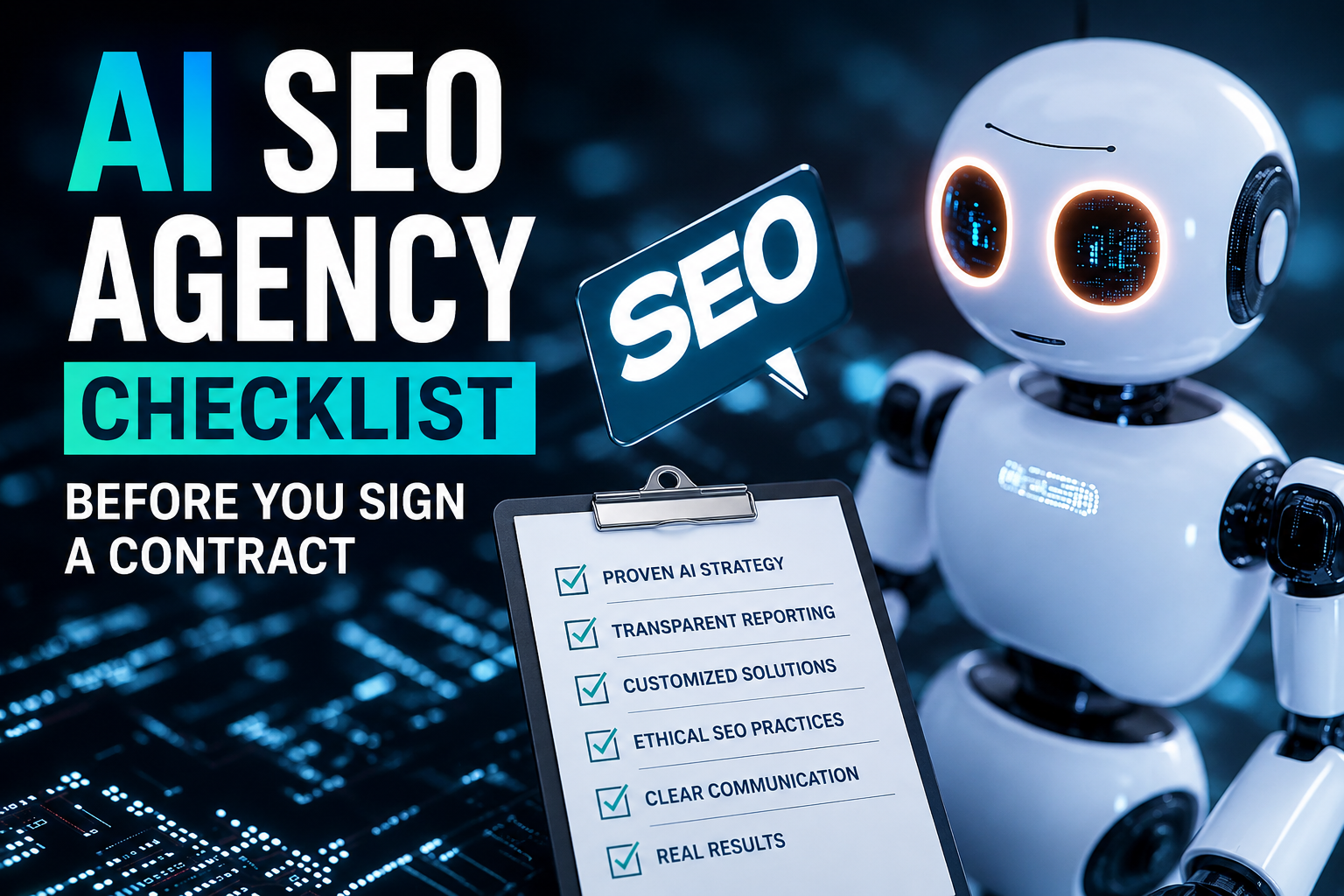
Digital Promenade Objective This post breaks down what actually separates a next-gen AI SEO agency...

Digital Promenade Objective This post breaks down what AI search optimization actually is, how ChatGPT,...
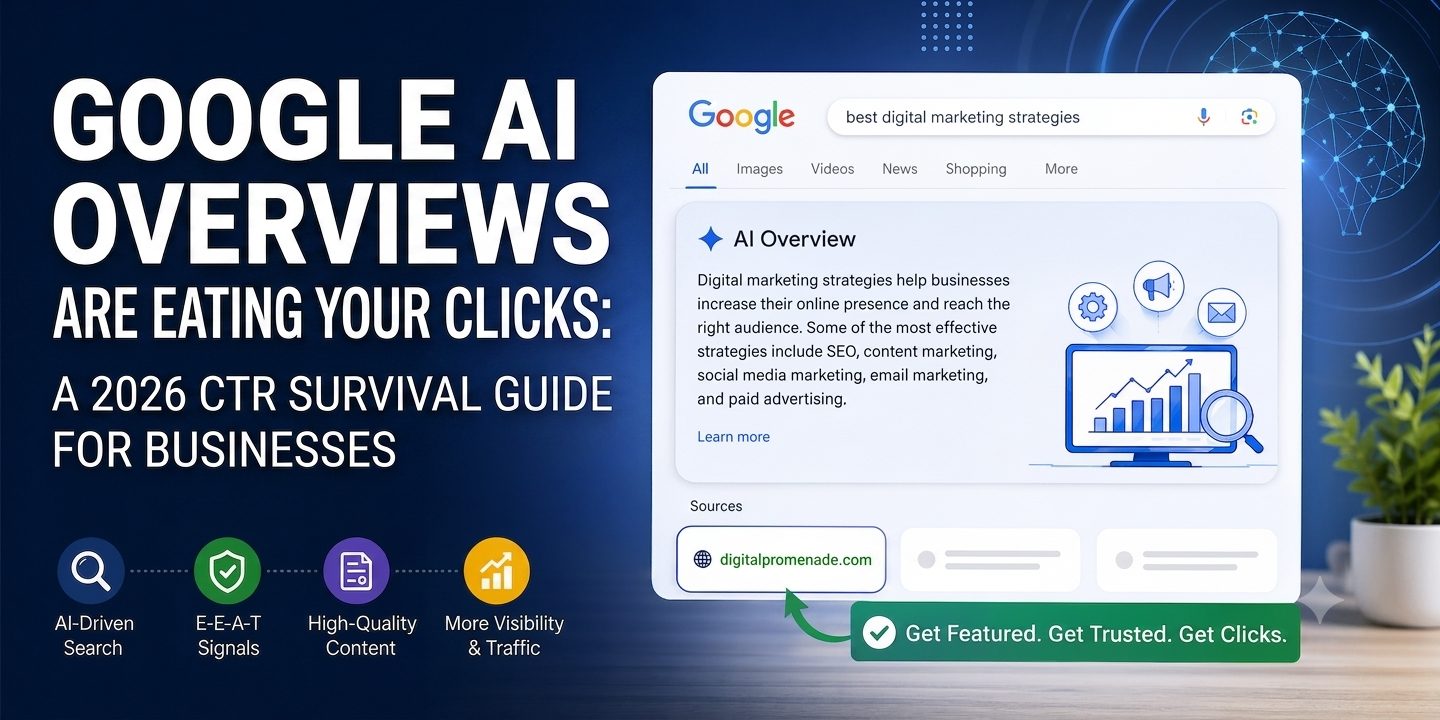
Digital Promenade Objective Google AI Overviews have fundamentally changed what it means to rank on...

Digital Promenade Objective AI agents in SEO are not a future concept – they are...
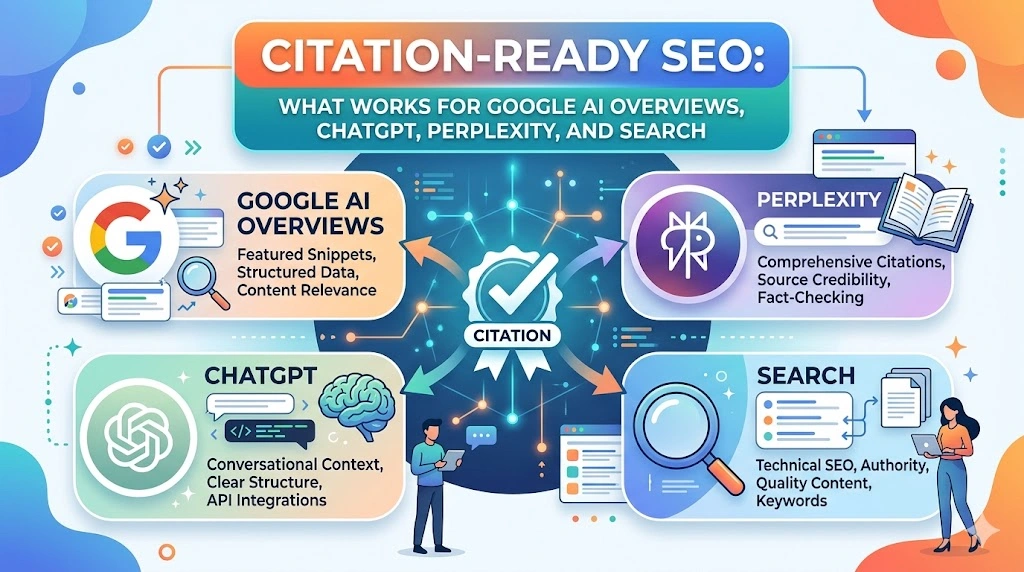
Digital Promenade Objective To get cited in ChatGPT, Perplexity, and Google AI Overviews, build consistent...

Digital Promenade Objective A technical SEO audit checklist covers crawlability and indexing, site speed and...
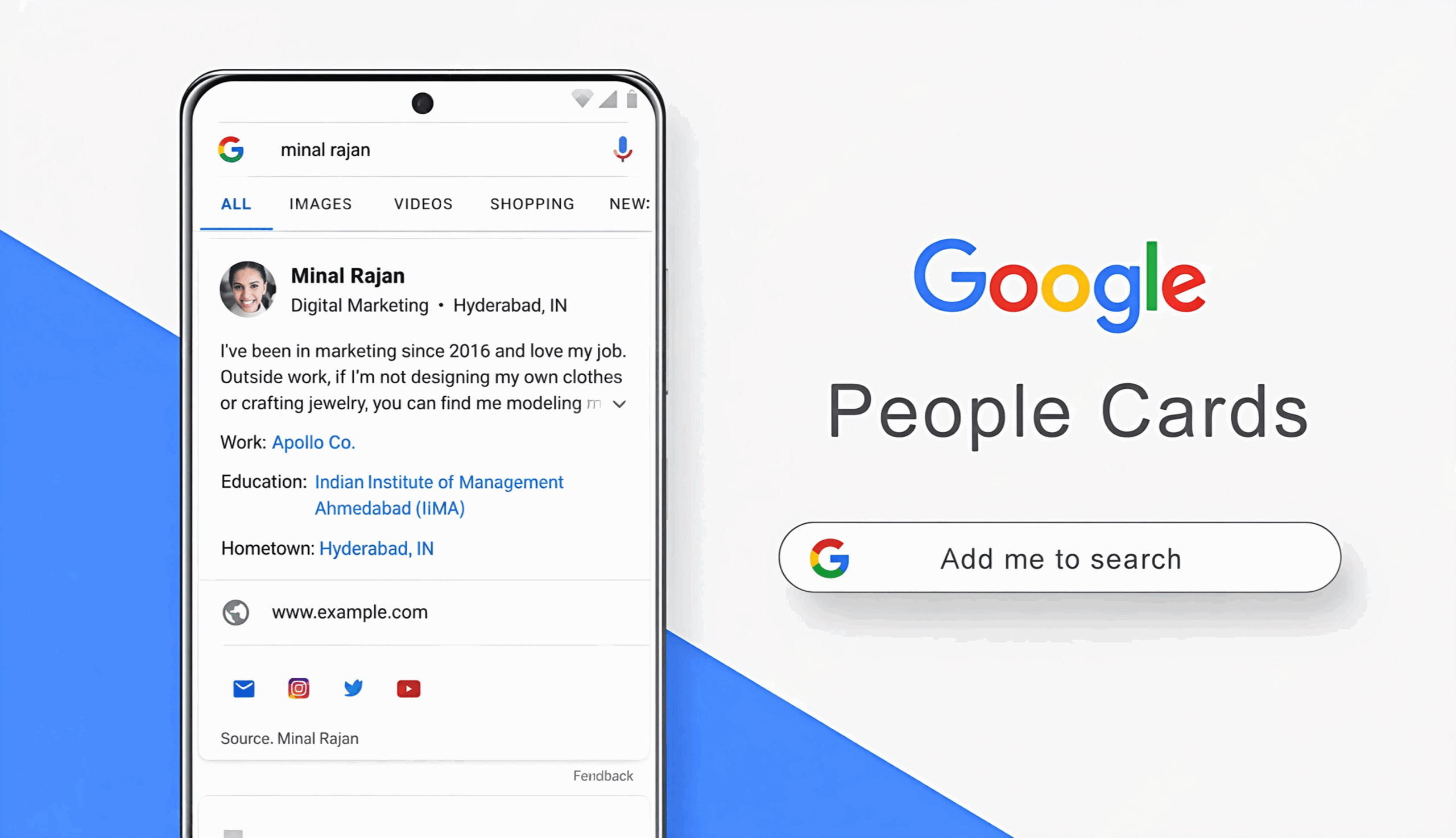
Digital Promenade Objective This blog is a practical, step-by-step guide to Google People Card in...

Digital Promenade Objective This blog helps businesses in Noida and Delhi NCR understand what separates...