Digital Promenade Objective This blog explains why SEO is important for B2B companies specifically –...
How Can SEO and Social Media Work Together? A Practical Guide for 2026
Digital Promenade
Objective
This blog explains how SEO and social media can work as complementary channels rather than competing priorities. It covers where the two disciplines genuinely overlap, how social activity supports SEO outcomes without directly influencing rankings, and what an integrated strategy looks like in practice.
Key Takeaways
- Social media does not directly influence Google rankings – social signals are not a confirmed Google ranking factor. But the indirect effects are substantial.
- Social media accelerates content distribution, which leads to more backlinks, more brand mentions, and faster indexation – all of which do affect SEO.
- Brand searches are an underrated SEO signal – social media builds the brand awareness that drives people to search for you directly.
- In 2026, social media platforms are themselves search engines. YouTube, TikTok, Instagram, and LinkedIn all have significant search behavior that deserves direct optimization.
- Content that performs well on social often signals topic relevance, which helps inform smarter SEO content strategy.
- Consistent brand presence across social and search reinforces entity recognition – a growing factor in both traditional SEO and AI search visibility.
The question of whether SEO and social media work together comes up often, and it tends to produce two unhelpful answers: “social media doesn’t affect SEO” (technically mostly true, but practically misleading) and “post on social media to boost your rankings” (not how it works at all).
The real relationship is more nuanced and, honestly, more useful than either of those takes.
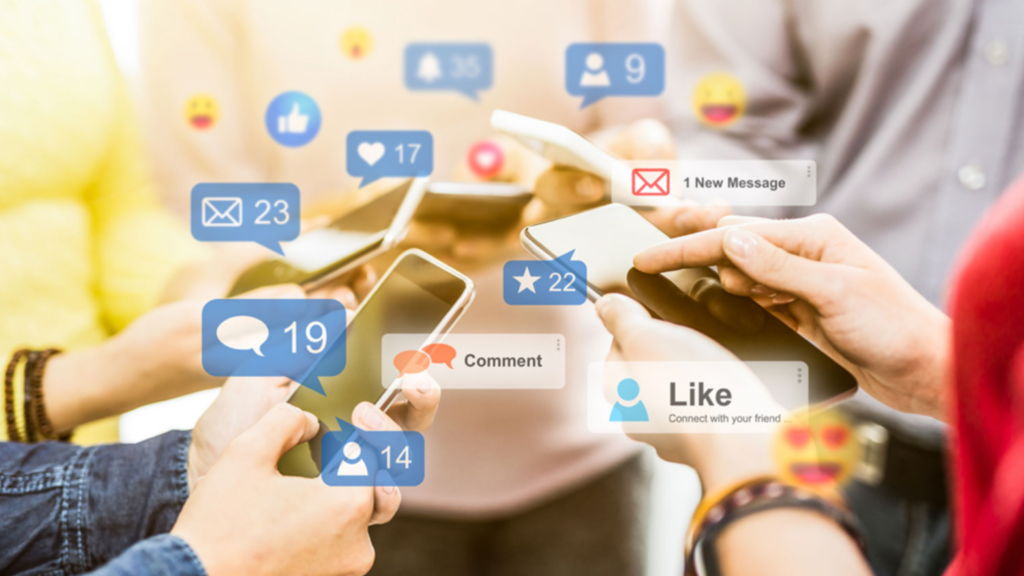
Social media and SEO are different channels that affect many of the same outcomes. Content discovery, brand authority, audience trust, and inbound links all sit at the intersection of both disciplines. Treating them as separate strategies misses the compounding effect you get when they’re coordinated.
Here’s what the connection actually looks like in 2026 – and how to build a strategy that makes both channels work harder.
Does Social Media Directly Affect SEO Rankings?
Let’s answer this clearly first.
Google has stated that social signals – likes, shares, followers, social engagement – are not direct ranking factors. A post going viral on Instagram will not cause your website to rank higher. Facebook shares don’t accumulate like backlinks.
So no, social media doesn’t directly affect Google rankings.
But this narrow technical answer misses most of what matters. The indirect effects of social media on SEO are real, measurable, and significant enough that ignoring them as part of your SEO strategy is a mistake. Building both channels together is at the core of what a full-service digital marketing approach looks like.
Where SEO and Social Media Actually Overlap
1. Content Distribution and Backlink Generation
The most direct connection between social media and SEO is this: social media distributes your content to audiences who might link to it.
A well-researched article published on your site and shared with nobody has almost no chance of earning backlinks organically. The same article shared strategically across relevant social communities, LinkedIn groups, and industry forums gets seen by journalists, bloggers, and other website owners who might reference it.
Backlinks remain one of the strongest ranking signals. Social media is a distribution mechanism that puts your content in front of the people most likely to create them.
2. Brand Mention Signals
When your brand is mentioned across social platforms – even without a link back to your site – it contributes to your online presence as an entity. Google tracks brand mentions as part of how it understands authority and prominence.
A brand that appears in social conversations and industry discussions is better documented as a real, active entity than one that exists only on its own website. This matters for both traditional SEO and AI search visibility.
3. Faster Indexation
Google’s crawlers discover new content in part by following social media signals. Pages shared widely on social platforms tend to get crawled and indexed faster than content published quietly with no external promotion.
For time-sensitive content news, event coverage, product launches this matters. Social distribution is one of the practical ways to tell Google “this content exists, come find it.”
4. Brand Search Volume
Brand searches people typing your company name directly into Google – are a positive engagement signal. When lots of people search for your brand, Google interprets that as a sign of trust and authority.
Social media marketing builds brand awareness. Brand awareness drives branded searches. Branded searches contribute to perceived authority. It’s a chain, not a single step, but it’s a real one.
5. Social Platforms as Search Engines
In 2026, this is increasingly important. YouTube is the second-largest search engine in the world. TikTok is how a significant portion of Gen Z discovers products and services. LinkedIn search drives B2B discovery.
These platforms have their own search algorithms. Optimizing for them using relevant keywords in captions, titles, descriptions, and hashtags is a form of SEO in its own right. YouTube SEO and optimization is a specific discipline worth investing in if video is part of your content strategy.
Practical Ways to Integrate SEO and Social Media
Build a Content Strategy That Serves Both Channels
Start with keyword research the topics people are actively searching for. Then build content that addresses those topics in a format suitable for your website. Then adapt that content for social distribution.
A comprehensive blog post becomes a LinkedIn article summary, a Twitter/X thread, a short-form video explainer, and an infographic. Each format reaches a different audience and creates different opportunities for engagement, shares, and backlinks.
The key is starting with search intent. Search-first content has a longer shelf life because it addresses ongoing demand, not just trending conversation.
Optimize Your Social Profiles for Search
Your social profiles appear in search results. Often they rank on the first page for branded searches. Make sure they’re complete, consistent with your website’s information, and describe your business in terms that match your target keywords.
Consistency matters for entity recognition. If your website says you’re a “digital marketing agency in London” and your LinkedIn profile describes you as a “growth consultancy,” you’re fragmenting the signal. Match the language across platforms.
Use Social Listening to Inform Content Strategy
Social media tells you what your audience is talking about, what questions they’re asking, and what language they use to describe their problems. This is free keyword research.
The questions people ask in LinkedIn comments, Reddit threads, or industry Facebook groups often reveal search queries you haven’t targeted. Turning those questions into blog posts and FAQ pages connects social insight directly to SEO output.
Amplify Content with Paid Social
Social media ads can amplify content distribution beyond your organic reach, putting your best-performing pieces in front of targeted audiences who are most likely to share, link to, or act on them. For content designed to earn backlinks or build brand awareness, this is a legitimate way to accelerate the indirect SEO effects social creates.
Build Relationships That Generate Links
Many backlinks come from relationships, not cold outreach. Social media is where those relationships start. Following and genuinely engaging with journalists, industry bloggers, and content creators in your niche means that when you have something worth sharing, they’re more likely to notice and reference it.
Coordinate Publishing and Promotion
When you publish new content for SEO purposes, treat it as a campaign across channels. Publish the piece. Share it on your social platforms. Email it to your list. The goal is maximum exposure in the first 30 days, when the content has the best chance of attracting early links and engagement.
Social Media SEO in 2026: The AI Dimension
AI tools are increasingly the way people discover brands and make decisions. When someone asks Perplexity “who are the best digital marketing agencies in London,” the AI pulls from publicly available information – websites, directories, press coverage, and social mentions.
Active social media presence contributes to this. A brand that has published consistently on LinkedIn, is mentioned in industry Twitter conversations, and has video content on YouTube is better documented as a real, active, relevant entity than a brand that exists only on its own website.
Social media is brand documentation infrastructure – and that documentation feeds AI visibility in ways that are increasingly hard to separate from traditional SEO outcomes.
Common Mistakes When Combining SEO and Social Media
Treating them as identical channels. SEO content needs to be thorough, structured, and optimized for search intent. Social content needs to be engaging, concise, and formatted for platform behavior. Trying to make one piece do both jobs usually means it does neither well.
Expecting social shares to move rankings. They don’t – not directly. Measure social by distribution, brand reach, and content engagement. Measure SEO by impressions, clicks, rankings, and leads.
Ignoring social search. Focusing only on Google while your audience is discovering competitors on YouTube, TikTok, or LinkedIn means you’re winning one channel and losing others.
Posting without a content strategy. Random social activity with no connection to your SEO content goals is just noise. The integration only produces results when both channels are pulling in the same direction.
Conclusion: Two Channels, One Visibility Goal
SEO and social media aren’t the same discipline and they don’t work the same way. But they’re aiming at the same outcome: getting your brand in front of the right people at the right moment.
Together, they work better. Separated into silos, each underperforms. In 2026, the most effective digital strategies treat them as two parts of one system and the businesses building both together are accumulating compounding advantages their competitors are going to find hard to close.
Ready to build an integrated strategy? Get in touch with Digital Promenade to see how we connect SEO and social media into a single, results-focused approach.
FAQs About SEO and Social Media
Not directly. Social signals are not confirmed Google ranking factors. But social media creates indirect effects that do influence SEO: content distribution, backlink generation, brand mention signals, and faster indexation.
Yes. Social media profiles and some posts particularly from YouTube, LinkedIn, and Twitter/X - do appear in Google search results. Optimizing your profiles with relevant keywords increases this visibility.
Social media distributes your content to audiences who might link to it. Journalists, bloggers, and website owners who discover your content through social platforms are more likely to reference or link to it.
YouTube, LinkedIn, and Twitter/X tend to have the most direct SEO crossover; their content is frequently indexed by Google. For local businesses, Facebook and Google My Business posts also have direct visibility implications.
Consistency matters more than volume. Regular posting maintains platform algorithm visibility and ongoing brand presence. The connection to SEO comes through content quality and distribution, not posting frequency alone.
Yes it refers to optimizing your social content for each platform's internal search algorithm. YouTube SEO, LinkedIn SEO, and TikTok SEO are all distinct practices worth investing in.
Active social presence contributes to how AI systems document and describe your brand. Brands with consistent content across social platforms are better represented in AI-generated answers.
Yes, but prioritize based on where your audience spends time. For most small businesses, local SEO and Google Business Profile produce faster returns. Social media marketing services are most valuable as a content distribution and brand-building channel alongside SEO, not instead of it. -e
Know Your Digital Goals
Digital Promenade Objective This blog explains how SEO and social media can work as complementary...
Digital Promenade Objective This blog answers definitively whether Google reviews help SEO and explains exactly...
Digital Promenade Objective This blog gives honest, experience-backed answers to one of the most common...

Digital Promenade Objective This blog helps startups and established brands in Noida and Delhi NCR...
Digital Promenade Objective This blog reveals the exact strategies used by the best SEO and...
Digital Promenade Objective This blog helps businesses understand how AI search engines discover, evaluate, and...

Digital Promenade Objective This blog helps businesses in Noida understand what a branding agency actually...
Digital Promenade Objective This blog explains why local SEO is essential for businesses in Noida,...

Digital Promenade In 2026, digital marketing is no longer just about visibility—it’s about precision, trust,...